Applications of 3D Printing in Formula 1
Discover how 3D printing is revolutionizing Formula 1 by enhancing design, reducing costs, and increasing team efficiency.
Discover the key features of 3D printers and choose the ideal one for your project with our comparative table. Find out the differences now!

Choosing the right 3D printer can be challenging, given the variety of models and specifications available on the market. With technologies like FDM, SLA, and SLS, each offers unique advantages that cater to different needs. For instance, FDM printers are widely popular for their accessibility and ease of use, making them ideal for beginners looking to create simple prototypes or functional parts. On the other hand, SLA printers, which use liquid resin cured by laser, are known for their ability to produce fine details and smooth finishes, making them an excellent choice for jewelry or dental models.
When analyzing options, it’s crucial to consider factors like build volume, resolution, and material compatibility. A common mistake is to focus solely on the initial price of the printer without taking into account the ongoing costs of materials and maintenance. For example, an SLA printer may have a lower initial cost, but the price of resins and the need for post-print cleaning and curing can increase long-term costs.
Additionally, the wrong choice can lead to frustrations, such as purchasing a printer with insufficient build volume for your needs, resulting in limitations when creating larger projects. A real case is an enthusiast who opted for a compact printer only to realize that their ambitions to print large parts required a machine with a larger build volume.
This article provides a comparative table highlighting the key features to assist in your decision-making. Carefully evaluating each technical specification and understanding your specific needs are essential steps to ensure you make an informed and successful choice.
3D printers are primarily classified into two types: FDM (Fused Deposition Modeling) and resin. Each of these technologies has its own advantages and specific applications, making them suitable for different types of projects.
FDM printers, like the Bambu Lab A1 Mini, work by heating and extruding plastic filament through a nozzle, layer by layer, to create the desired object. These printers are ideal for creating prototypes and large-scale parts due to their ability to print quickly and at a relatively low cost. However, a common limitation is the visibility of the print layers, which may require post-processing for a smoother finish.
On the other hand, resin printers, such as the Elegoo Mars 5 Ultra 9K, utilize a photopolymerization process, where a liquid resin is solidified layer by layer using UV light. This method provides a much higher level of detail, making them perfect for creating detailed miniatures and complex jewelry pieces. A common mistake when using resin printers is not properly adjusting the UV light exposure time, which can result in print failures or inaccurate details.
A concrete example of using FDM printers is creating custom supports for electronics, where strength and cost-effectiveness are more important than surface finish. In the case of resin printers, an example would be producing dental prototypes, where precision and detail are crucial. When choosing between FDM and resin, it’s essential to consider your project’s specific needs, the available material, and the desired level of detail to ensure the best results.
Print speed is a determining factor in the success of projects with tight deadlines. Printers like the Bambu Lab P1S + AMS are designed to maximize efficiency without sacrificing quality, achieving remarkably high speeds that can be decisive in production environments. For example, when printing a batch of mechanical part prototypes, the ability to operate at a higher speed can save hours or even days, depending on the production volume.
However, it’s important to understand that print speed is not just about how quickly the filament is deposited. It also involves acceleration, deceleration, and the ability to maintain precision during rapid movements. A common mistake is to increase speed without adjusting other parameters, such as nozzle temperature or cooling rate, which can lead to layer adhesion failures or rough surfaces.
A practical example of an error is trying to print a detailed model at high speed without considering the complexity of the geometries. This can result in blurred or inaccurate details. Therefore, while printers like the Bambu Lab P1S + AMS offer high speed, it’s crucial to balance speed with the desired resolution and material characteristics. In some cases, reducing speed may be more advantageous to ensure that details are accurately reproduced.
In summary, when choosing a 3D printer, considering print speed alongside other technical parameters can optimize workflow and avoid common pitfalls, ensuring that the final results meet quality and deadline expectations.
Resolution is a determining factor in the final quality of 3D printed parts, directly influencing the precision of details and the smoothness of surfaces. When we talk about resin printers, such as the Anycubic Photon Mono M7 Pro 14K, we are dealing with devices that offer extremely high resolution, measured in microns. This means they can create very thin layers, resulting in a smoother surface finish and sharper details.
For example, when printing a character miniature with complex details, such as skin textures or intricate ornaments, a resin printer can capture these nuances with a precision that a general-use FDM printer would not achieve. The Anycubic Photon Mono M7 Pro 14K is particularly effective for this type of work due to its high-resolution screen that allows for the curing of resin with extremely thin layers.
However, it’s important to be aware of a common mistake: confusing resolution with precision. Resolution refers to the printer's ability to create fine details, while precision relates to the ability to consistently reproduce the exact dimensions of the designed model. Even with high resolution, factors like inadequate calibration or low-quality resin can compromise dimensional accuracy.
An extreme case that illustrates this difference is when printing fitting parts. Even if the resolution is high, if the printer is not properly calibrated, the fittings may be loose or not fit as expected. Therefore, in addition to choosing a printer with high resolution, it’s essential to ensure that it is well calibrated and that the material used is of good quality to achieve both the desired resolution and precision.
Material compatibility in 3D printers is a crucial factor that determines the flexibility and range of your projects. Printers like the Creality Ender-3 V3 KE are known for their ability to work with a variety of filaments, including PLA, PETG, and ABS, each with its own properties and specific uses. PLA, for example, is easy to use and biodegradable, making it ideal for quick prototypes and decorative parts. PETG offers impact and moisture resistance, making it a popular choice for functional parts. ABS, on the other hand, is known for its durability and high-temperature resistance but requires a heated bed to avoid warping during printing.
A practical example would be creating a mechanical part that needs to withstand heat and pressure. In this case, opting for ABS would be the most logical choice, provided the printer can maintain an adequate extrusion temperature and has an enclosed chamber to minimize warping. However, a common mistake is trying to print ABS on a printer without a heated bed, which often results in warped parts and poor adhesion to the base.
Another point to consider is the need to adjust print settings for each material. For example, PETG may require a slower print speed and a slightly higher extrusion temperature than PLA to ensure good layer adhesion. Ignoring these specifics can lead to unsatisfactory results, such as rough surfaces or structural failures. Therefore, always check the manufacturer's specifications and adapt your printer settings to optimize compatibility and performance with the chosen materials.
For beginners, ease of use is one of the most important factors when choosing a 3D printer. Models like the FlashForge Adventurer 5M are known for their intuitive interfaces and simplicity in assembly, making them ideal options for those starting in the world of 3D printing. This printer, for example, comes almost fully assembled, reducing initial complexity. Just a few simple steps are needed to start printing: connect the printer, load the filament, and select the desired model on the user-friendly touchscreen interface.
A real example of ease of use is the automatic leveling system of the print bed, which is a feature present in many beginner-oriented models. This system eliminates the need for complicated manual adjustments, which can be challenging for those without experience. Additionally, the FlashForge Adventurer 5M has Wi-Fi connectivity, allowing files to be sent directly from the computer to the printer without the need for cables or SD cards.
However, a common mistake among beginners is to overlook the importance of initial calibration. Even with automatic systems, it’s crucial to follow the manufacturer's instructions to ensure that the first layer is printed correctly. A poorly done first layer can result in print failures or parts that do not adhere properly to the bed. Therefore, taking the time to understand and correctly set up the printer can make all the difference in the quality of the final results. With time and practice, the learning curve becomes less steep, allowing even novices to create high-quality prints with ease.
The initial and maintenance costs vary significantly among 3D printer models, and it’s crucial to consider all the factors involved. Beyond the price of the printer, the cost of materials such as filaments or resins can significantly impact the long-term budget. For example, the Bambu Lab PLA LITE is a popular filament for FDM printers, known for its ease of use and print quality. However, the price can vary depending on the supplier and the desired color. For resin printers, the ELEGOO Resina 2.0 is a common choice, offering good strength and finish but requiring special care in handling and post-processing, which can increase operational costs.
A concrete example is the comparison between an entry-level FDM printer and a mid-range resin printer. While the FDM printer may have a lower initial cost, the filaments can be more economical in the long run, especially if purchased in bulk. On the other hand, resin printers, while offering greater precision and detail, may require additional expenses for isopropyl alcohol for cleaning and UV lamps for curing the parts.
A common mistake is underestimating maintenance costs. Many new users focus solely on the initial cost of the printer, forgetting that parts like extrusion nozzles, print beds, and resin filters need periodic replacement. Another critical point is the lack of planning for preventive maintenance, which can avoid more serious and costly failures. Therefore, when choosing a printer, it’s important to calculate the total cost of ownership, including replacement parts and regular maintenance, to avoid financial surprises in the future.
When comparing 3D printers, it’s crucial to consider technical factors such as the type of printing technology (FDM, SLA, SLS), build volume, precision, and material compatibility. For example, FDM printers are popular for their accessibility and ease of use, but they may not offer the same level of detail precision as SLA printers, which use liquid resin to create thinner layers. If your project requires high resolution in small parts, an SLA printer may be the ideal choice.
Also consider the printer's build volume. If you plan to print large objects, a machine with a larger print volume will be more suitable. However, printers with larger volumes may come at a higher cost and take up more physical space.
A common mistake when choosing a 3D printer is not considering material compatibility. Some printers are limited to certain types of filaments or resins, which can restrict the variety of projects you can undertake. For instance, if you are interested in printing with flexible or composite materials, make sure the printer supports those specific materials.
Imagine a scenario where you choose an SLA printer to create detailed jewelry prototypes. The precision and surface quality are excellent, but if you do not check the resin compatibility with the desired finish, you may encounter problems in the post-processing phase, such as difficulty in painting or sanding the piece.
Therefore, when using the comparative table, evaluate how each technical specification aligns with your specific needs to ensure that the chosen printer truly meets the requirements of your project. This careful analysis will avoid unpleasant surprises and ensure that you get the most out of your 3D printing experience.
There are mainly two types: FDM and resin. FDM is ideal for large parts and prototypes, while resin is better for precise details.
Print speed is crucial for projects with tight deadlines. Fast printers can increase the efficiency of your workflow.
Resolution determines the quality and precision of printed parts. Resin printers generally offer better resolution.
Consider the price of printing materials and potential repairs. The cost of filaments and resins can vary significantly.
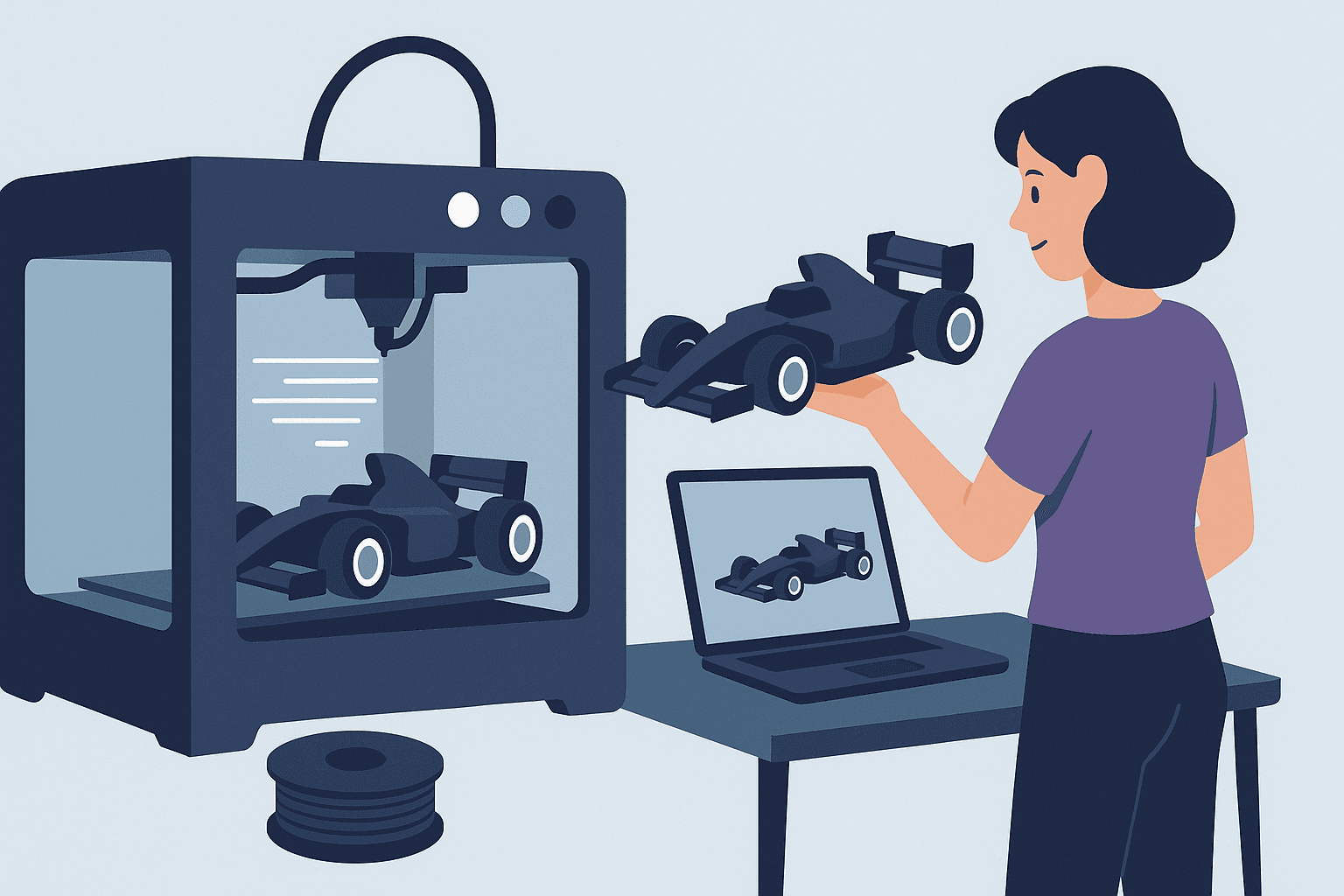
Discover how 3D printing is revolutionizing Formula 1 by enhancing design, reducing costs, and increasing team efficiency.
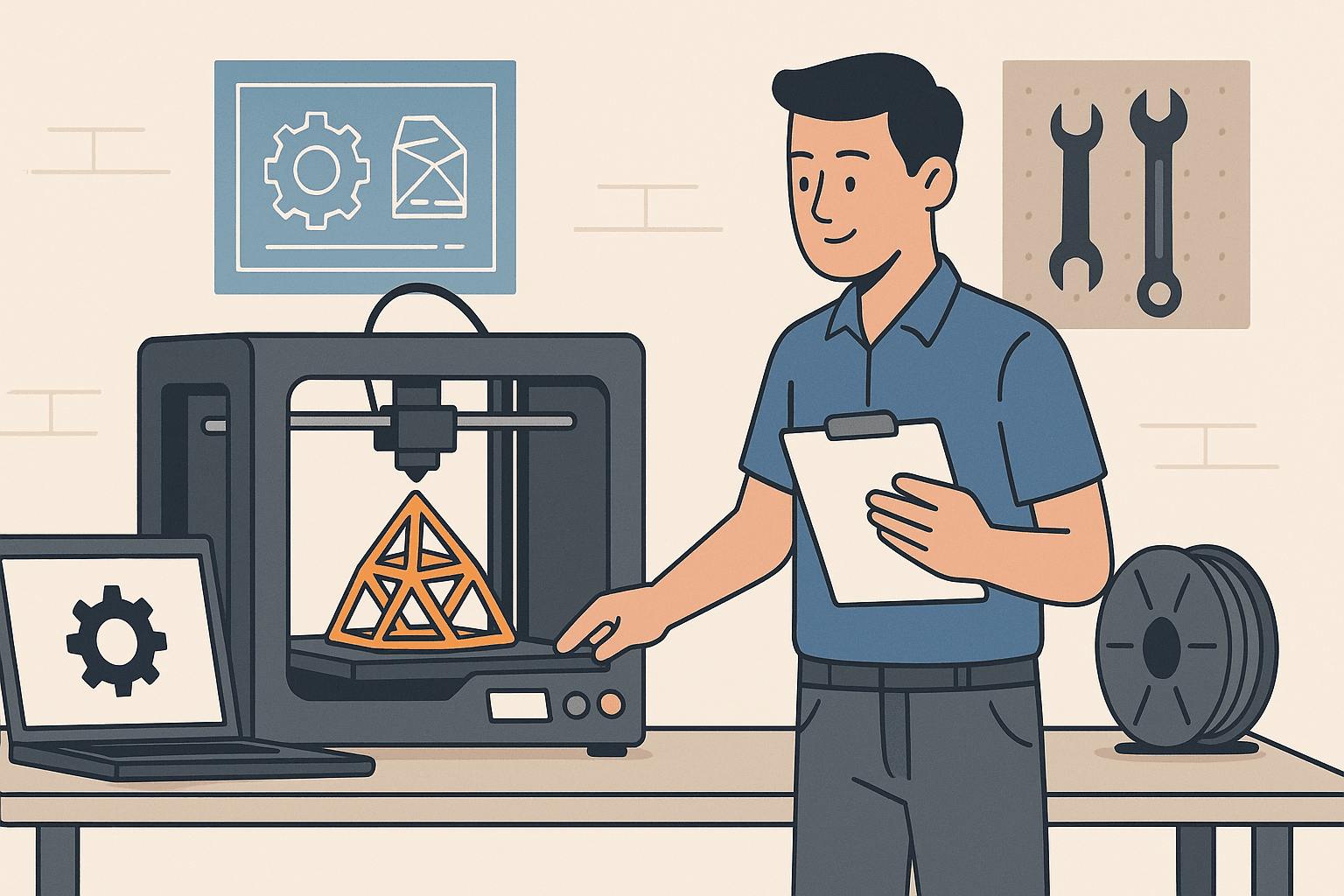
Discover how engineering and 3D printing are transforming design and production, offering innovative and customized solutions across various sectors.
Learn how to calculate 3D printing costs by considering material expenses, print time, and maintenance to optimize your projects.