Applications of 3D Printing in Formula 1
Discover how 3D printing is revolutionizing Formula 1 by enhancing design, reducing costs, and increasing team efficiency.
Discover how engineering and 3D printing are transforming design and production, offering innovative and customized solutions across various sectors.
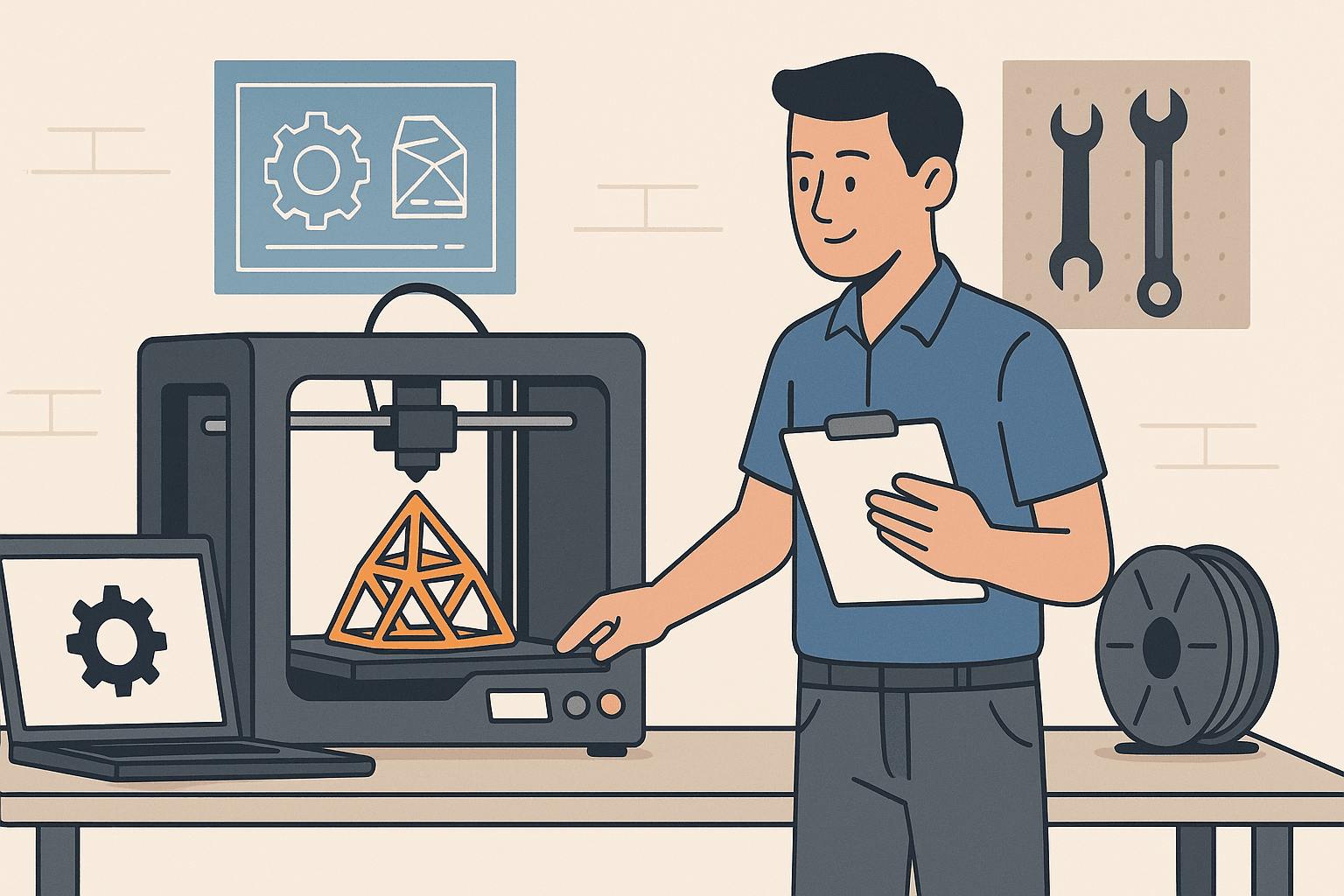
Engineering and 3D printing are merging to create a revolution in design and manufacturing. This technology allows engineers to quickly turn ideas into prototypes, reducing development time and costs. The ability to iterate designs rapidly and economically is one of the greatest benefits of 3D printing in engineering. For example, in the automotive industry, engineers use 3D printers to create prototype parts for aerodynamic testing and fitting, enabling quick adjustments without the need for expensive traditional manufacturing tools.
A concrete example is the use of 3D printing in the production of engine components. Engineers can design a complex part in CAD software and then print it using materials like nylon or high-strength resins, which are suitable for functional testing. This not only speeds up the development process but also allows experimentation with geometries that would be impossible to manufacture otherwise.
However, a common mistake many engineers make is not considering the limitations of 3D printing materials from the start of the design process. Materials like PLA or ABS, while popular, may not offer the strength or durability needed for specific applications. Therefore, it is crucial to select the right material for the right purpose, taking into account factors such as temperature resistance, mechanical strength, and flexibility.
Additionally, 3D printing enables mass customization, which is particularly useful in fields like medicine. However, excessive customization can lead to logistical challenges and quality control issues. Therefore, engineers must balance innovation with practicality to ensure that final products meet safety and performance standards.
3D printing has revolutionized engineering by providing unprecedented design flexibility. With this technology, engineers can create complex and intricate shapes that would be unfeasible with traditional manufacturing methods, such as machining or injection molding. For instance, creating internal lattice structures in aviation parts, which reduce weight without compromising strength, is an achievable feat thanks to 3D printing.
Moreover, 3D printing allows for the on-demand production of customized parts, which is particularly advantageous in sectors like automotive and medical, where customization is often required. Imagine the ability to print spare parts for vintage vehicles that are no longer in production or custom medical prosthetics that fit perfectly to a patient's body. These examples demonstrate how technology can optimize material usage and reduce waste, as only the necessary amount of material is used for each part.
However, it is important to be aware of certain challenges and common mistakes. A frequent error is underestimating the importance of part orientation during printing, which can affect the mechanical strength of the final product. Another critical point is material selection. Each type of polymer or metal has specific properties that directly impact the performance of the printed part. For example, using an unsuitable material can result in a part that cannot withstand the intended conditions of use, such as high temperatures or pressures. Therefore, careful material selection and understanding the limitations of the technology are essential to maximize the benefits of 3D printing in engineering.
3D printing is revolutionizing engineering by enabling the creation of components that were previously impossible to manufacture with traditional techniques. In the automotive sector, for example, 3D printing is used to produce complex and lightweight parts, such as intake manifolds and engine mounts, which help improve fuel efficiency. A notable example is the company Bugatti, which used 3D printing to produce titanium brake calipers, significantly reducing weight without compromising strength.
In the aerospace sector, 3D printing is essential for creating components that need to withstand extreme conditions. NASA, for instance, uses the technology to create rocket parts that are lighter and more heat-resistant, such as engine nozzles and structural supports. The ability to print complex parts in a single step reduces the need for assembly and decreases the risk of failures.
In medical engineering, 3D printing allows for the production of custom prosthetics that fit perfectly to the patient, enhancing comfort and functionality. An interesting case is the creation of custom cranial implants, which are designed and printed based on CT scan images of the patient, ensuring a perfect fit.
However, a common mistake when adopting 3D printing in engineering is underestimating the importance of choosing the right materials. Using an unsuitable material can result in fragile parts or those that do not meet safety specifications. It is crucial to conduct rigorous testing to ensure that the chosen material meets all technical and regulatory requirements. Thus, 3D printing continues to open new possibilities in engineering but requires careful planning to ensure project success.
3D printing materials are diverse, ranging from plastics to metals, each with unique properties that meet different design needs. Filaments like PLA and PETG are widely used due to their ease of use and versatility. PLA, for example, is a biodegradable thermoplastic derived from renewable resources like corn starch, making it an eco-friendly choice. It is ideal for rapid prototyping and parts that are not subjected to high mechanical or thermal stresses. The Bambu Lab PLA LITE is a popular option, offering good bed adhesion and precise details.
On the other hand, PETG combines the printability of PLA with the strength of ABS, being impact-resistant and moisture-resistant. The Creality PETG Filament is often chosen for projects requiring durability and chemical resistance. However, it is crucial to properly adjust the extrusion temperature and print speed to avoid issues like stringing and warping.
In addition to plastics, resins are essential for SLA printers, providing extremely fine details and smooth surfaces. They are ideal for applications requiring high precision, such as jewelry and dentistry. A common mistake when working with resin is not using proper protection, as the chemical compounds can be toxic. Additionally, post-curing is a critical step to ensure that the part reaches its ideal mechanical properties.
Finally, metallic materials, such as stainless steel and titanium, are used in laser sintering printers to create functional parts in sectors like aerospace and medical. The precision and complexity that these materials allow are unmatched, but they require specialized equipment and controlled conditions to avoid printing failures.
Choosing the right 3D printer is a fundamental step for engineers seeking efficiency and precision in their projects. The Bambu Lab A1 Mini is a popular choice due to its ability to print with high resolution, allowing for the creation of detailed and complex parts. This printer is ideal for functional prototypes, where dimensional accuracy and finish quality are crucial. A practical example is the development of components for drones, where every millimeter counts to ensure aerodynamics and performance. The Bambu Lab A1 Mini supports multiple materials, such as PLA, ABS, and PETG, expanding the possibilities for experimentation and innovation.
On the other hand, resin printing, such as that offered by the Elegoo Mars 5 Ultra 9K, is exceptional for applications requiring smooth surfaces and fine details, such as reverse engineering models or prototypes of small and intricate parts. This printer uses monochrome LCD technology, which speeds up the resin curing process, resulting in faster print times without sacrificing quality.
A common mistake when choosing a 3D printer is ignoring the specific needs of the project. Engineers often underestimate the importance of considering the printer's build volume. For example, opting for a model with a limited print volume may restrict the ability to create larger parts, forcing the project to be divided into multiple pieces, which can lead to alignment issues and structural strength problems. Therefore, it is essential to evaluate not only the printing technology but also the technical specifications that best align with the project goals. By investing time in choosing the right printer, engineers can avoid frustrations and ensure that their projects achieve the desired success.
3D printing offers an innovative approach to reducing costs in engineering projects, especially when compared to traditional manufacturing methods. Using a 3D printing calculator is crucial for accurately predicting expenses, as it considers variables such as the type of material used, part volume, and the time required for printing. For example, by choosing PLA instead of ABS, not only do you save on material costs, but also on printing time, since PLA generally requires lower temperatures and, therefore, less energy.
A practical example is the manufacturing of prototype housings for electronic devices. By using 3D printing, it is possible to iterate quickly over different designs without the need to create expensive molds. This not only reduces development time but also eliminates material waste, as only the necessary amount for each part is used.
However, it is essential to be aware of some common mistakes that can increase costs. One of them is the inappropriate choice of printing parameters, such as layer thickness and fill density. Settings with very thin layers or excessive filling can significantly increase printing time and material usage, raising costs. Additionally, underestimating printer maintenance time or failing to anticipate possible failures during printing can lead to unplanned expenses. Therefore, having a clear understanding of the project specifications and adjusting parameters accordingly is essential to maximize savings when using 3D printing in engineering.
The future of engineering with 3D printing is filled with promises and challenges. With the continuous evolution of materials, such as high-strength polymers, metals, and even biocompatibles, the possibilities for design and manufacturing are expanding exponentially. A concrete example is the use of 3D printing in the aerospace industry, where complex and lightweight parts are created to improve fuel efficiency and reduce costs. Airbus already uses 3D printed parts in its airplanes, enabling designs that would be impossible with traditional methods.
However, the incorporation of 3D printing into engineering is not without challenges. A common mistake is underestimating the importance of design for manufacturability (DFM). Designs that do not consider the limitations and possibilities of 3D printing can result in parts that are not optimized for the process, leading to failures or unnecessary costs. For example, ignoring part orientation during printing can result in structural weaknesses due to the printing layers.
Furthermore, integrating 3D printing into engineering processes requires a shift in mindset. Engineers need to familiarize themselves not only with 3D modeling software but also with the properties of printing materials and the specifics of each technology, such as FDM, SLA, or SLS. This learning curve is essential to avoid surprises in the performance of the final parts.
Thus, while 3D printing promises to be a revolutionary tool, its success depends on a deep understanding of its capabilities and limitations. Engineers who invest time in exploring and mastering this technology will be at the forefront of innovation in their fields.
3D printing enables rapid prototyping, reduces costs, and offers design flexibility, allowing for the production of complex and customized parts.
Sectors such as automotive, aerospace, and medical are adopting 3D printing to create lighter and more efficient components, such as prosthetics and automotive parts.
Materials range from plastics like PLA and PETG to metals and resins, each chosen based on the necessary characteristics for the project.
Consider the precision and versatility needed for the project. Models like the Bambu Lab A1 Mini and the Elegoo Mars 5 Ultra 9K are great options.
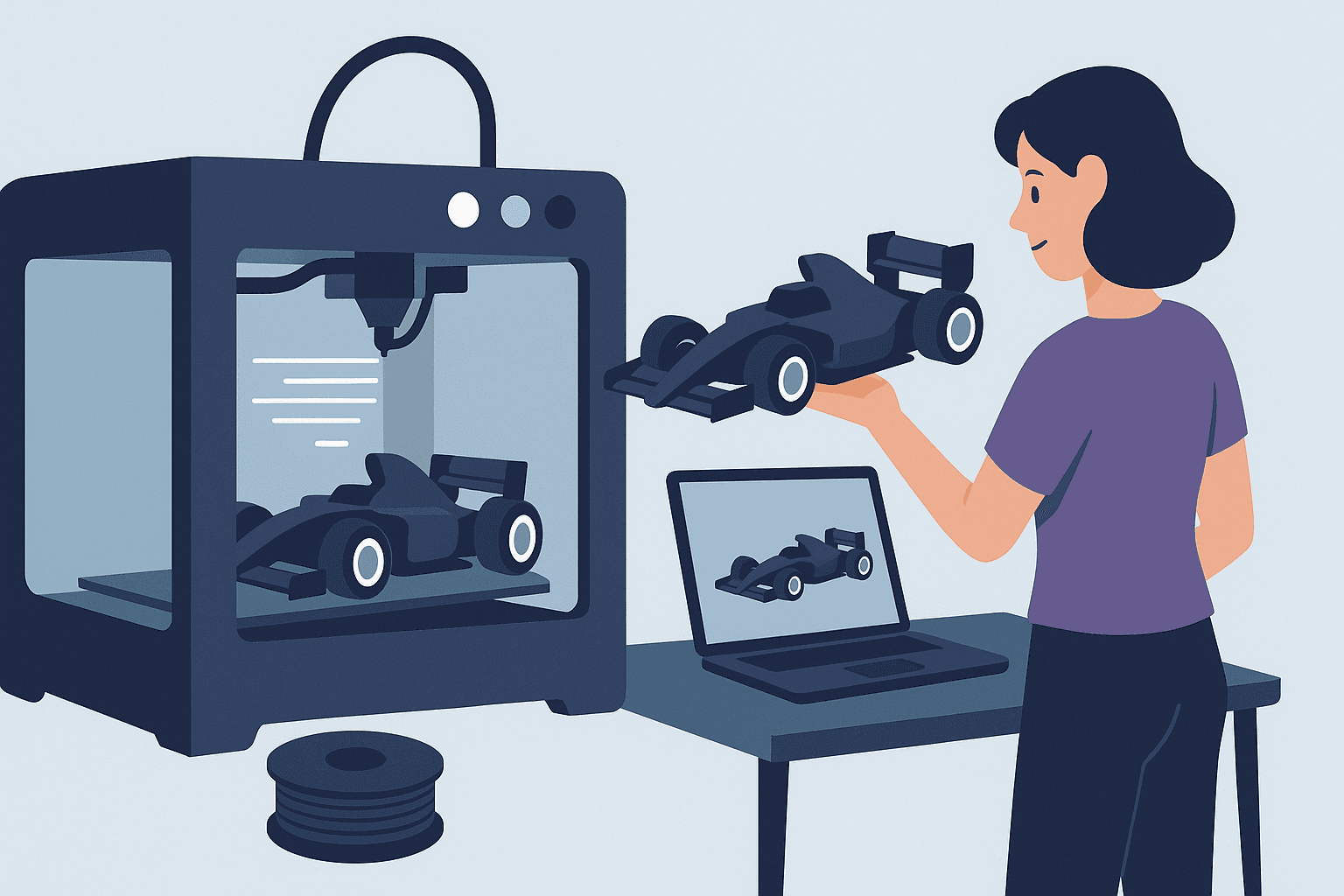
Discover how 3D printing is revolutionizing Formula 1 by enhancing design, reducing costs, and increasing team efficiency.

Discover the key features of 3D printers and choose the ideal one for your project with our comparative table. Find out the differences now!

Learn how to calculate 3D printing costs by considering material expenses, print time, and maintenance to optimize your projects.