FDM 3D Printer or Resin: Which to Choose?
Discover the differences between FDM and resin 3D printers to decide which is the best option for your specific projects and needs.
Discover the main differences between FDM and resin 3D printers, and how to choose the best option for your printing needs.
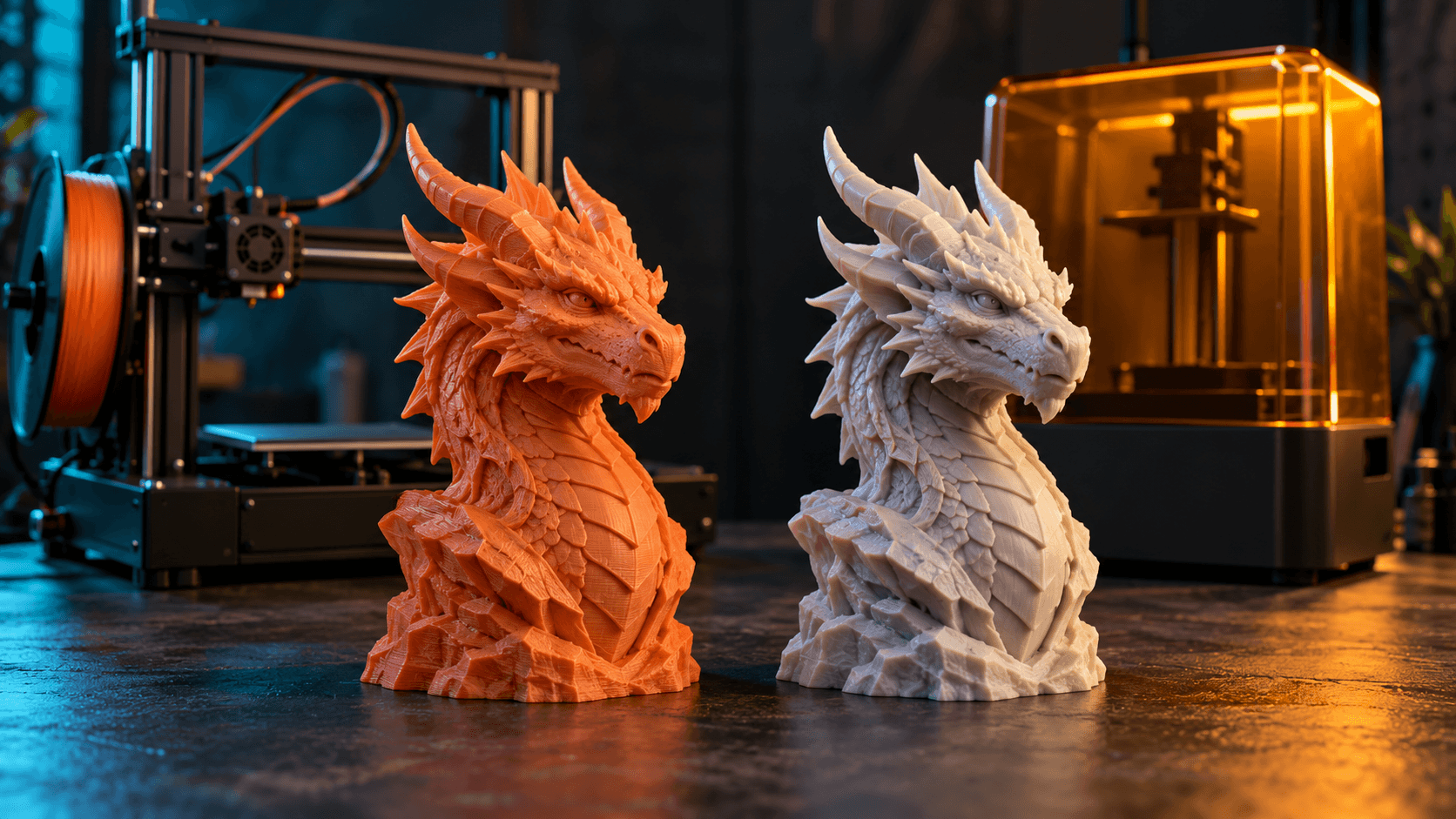
The FDM 3D printer is often the most practical choice for starting with utilities, organizers, and larger parts. The resin printer makes more sense when the priority is miniatures, small details, and fine finishes. The decision also depends on the material, total cost, and available workspace.
Imagine two projects: a tool holder and an RPG miniature. For the holder, dimensions, strength, and ease of production may weigh more. For the miniature, the face and texture of the clothing can define the perceived quality.
This comparison shows how to choose between filament and resin considering the object you want to produce and the routine needed to get it ready.
These are general trends. Compare specific models and materials before deciding: there are equipment of different sizes and resins developed for functional applications.
An FDM printer heats a plastic filament and deposits it through a nozzle, forming the object layer by layer. You may also encounter the acronym FFF for this type of process.
Before printing, a program called a slicer transforms the 3D model into instructions for the machine. In it, you define layer height, walls, infill, and supports.
Among the available materials are PLA, PETG, and TPU. They have different properties; check the manufacturer's guidelines and compatibility with the printer. The right material for a decoration may not suit a flexible or heat-exposed part.
FDM is an option to consider for organizers, boxes, holders, accessories, and prototypes. In the case of functional parts, the result also depends on the design and the parameters used.
A model in this category is the Creality Ender-3 V3 KE. To evaluate the purchase, compare features, support, availability of spare parts, and the range of materials you plan to use.
The resin printer uses light to selectively solidify a liquid material, building the object in layers. Within this family, there are different ways to produce and direct the light:
Therefore, not every resin printer uses an LCD screen. This distinction helps understand the specifications and avoids comparing technologies as if they were identical.
Resin deserves attention for RPG miniatures, busts, figures, and models with small textures. In professional applications, the choice also requires evaluating the material and process requirements.
An Elegoo Mars 5 Ultra, for example, uses LCD and belongs to the MSLA category. Besides the machine, plan for washing and post-curing the parts.
For very small details, resin usually has the advantage. This is evident in elements like eyes, hair, inscriptions, and textures of a miniature. FDM also produces good results, but the nozzle, layer height, and orientation influence the finish.
When comparing resin printers, look at more than just the advertised “K” number. In the Mars 5 Ultra, Elegoo states a 9K screen and an XY resolution of 18 micrometers. These numbers describe system characteristics; they do not mean that any piece will come out with a dimensional error of just 18 micrometers.
Layer height, XY plane resolution, and dimensional accuracy are different measurements. A fitting needs to be evaluated by its final dimension and repeatability, in addition to appearance.
Durability depends on the material and how the part was produced. Choosing based solely on technology overlooks factors like applied stress, temperature, geometry, and usage conditions.
In FDM, orientation and the bond between layers influence the part's behavior. A change in positioning or parameters can alter the outcome.
In resin, there are formulations with significantly different properties, including materials aimed at impact, flexibility, and other requirements. A resin chosen for appearance may not necessarily suit a fitting that will be opened repeatedly.
For a functional part, consult the technical data sheet, observe testing conditions, and conduct representative tests. The commercial name “durable” or “ABS-like” alone does not prove suitability for your project.
For many entry-level projects, FDM offers a simpler routine for materials and finishing. However, the price of the printer does not represent the entire investment, and the cost per piece varies based on size, material, supports, and waste.
A discounted resin machine may seem advantageous until you factor in the washing, curing, and handling setup. On the other hand, a small, detailed piece may justify this process.
Consider these scenarios, created just to demonstrate the calculation:
The calculation is: price per kilo ÷ 1,000 × grams consumed.
The values are not a market quote. Using the same weight serves only to show the formula: the same model may consume different amounts in each technology. If resin is sold by the liter, check the density to convert volume to mass correctly.
In FDM, consider filament, supports, failures, energy, maintenance, and machine wear. In resin, also add washing liquid, protective equipment, tank film, potential screen replacement in LCD models, and waste disposal.
In both cases, include your preparation and finishing time. Production cost and selling price are different values: the price needs to cover expenses and profit margin.
A useful comparison starts by slicing the same project in both technologies and recording consumption, time, and steps needed until the piece is ready.
Compare the useful dimensions of the print area. Between the two examples in this article, manufacturers state:
This comparison holds for these models. There are larger resin printers and compact FDM machines.
Also check the space for supports, the orientation of the piece, and the area occupied by the machine while in operation. On the workbench, allow access for cleaning and removing prints.
The answer varies depending on the machine, model, and parameters. Comparing only the maximum advertised speed often leads to unrealistic expectations.
In FDM, the nozzle travels the necessary paths to form the piece. In MSLA equipment, exposure occurs over the layer, allowing multiple pieces to be produced on the same platform without proportionally multiplying exposure time.
This can favor batches of miniatures of similar heights. Still, total height, platform movements, material, and adjustments alter the duration.
To compare productivity, count printing, washing, drying, curing, support removal, and finishing, as each process requires. This is the time until the object is available for use or delivery.
In FDM, keep an eye on surface cleaning, the state of the nozzle, and maintenance points indicated in the manual. A first layer with good adhesion helps avoid losses. Machines with automatic leveling also need proper installation and adjustments.
In resin, organize an area for removing, washing, drying, and post-curing the parts. Use the washing product and procedure indicated for the material. There is no universal curing time that works for every resin and equipment.
A washing and curing station can make the routine easier. If you are considering the Elegoo Mercury XS, check capacity, compatibility, and available space before purchasing.
Handling liquid resin requires proper protection, such as compatible gloves and eye protection, according to the safety data sheet. The environment should also meet the ventilation guidelines for the material and equipment.
FDM printers can also release particles and compounds during operation. Plan ventilation and emission control for the chosen technology; a little smell does not prove the absence of exposure.
Do not dispose of liquid resin or contaminated liquids in the sink. This includes water used with water-washable resin. Consult the safety data sheet and local guidelines for waste disposal.
Use your most frequent project as a starting point:
This is an initial guideline, not a universal ranking. Before purchasing, choose three objects you intend to produce. Note dimensions, expected material, finish, and monthly quantity.
Then, check if the printer meets these requirements and if the budget covers the complete operation. This exercise is more helpful than choosing based solely on the highest speed or advertised resolution.
For utilities and various projects, an FDM printer with PLA is usually a practical starting point. If the main goal is detailed miniatures and you can manage handling and post-processing, starting with resin can also make sense.
Yes. The result depends on the model, size, nozzle, and adjustments. To assess if it meets your expectations, look for examples in the desired scale. Very small details tend to favor resin printing.
No. The washing liquid depends on the formulation. Some resins use isopropyl alcohol; others allow specific solutions or water. Follow the procedure indicated by the manufacturer and dispose of the contaminated liquid properly.
No. There are different filaments and resins, each with distinct properties. Compare strength, elongation, thermal behavior, and processing conditions for the intended use.
It depends on the product and the customer. To decide, produce samples and measure cost, failures, finish, and time per approved unit. The most suitable technology is the one that delivers the expected result with a financially viable operation.
Before buying, choose the pieces you want to print and compare the complete process. The best investment is the machine that meets your goal and fits into your production routine.
FDM printers use extruded plastic filament, while resin printers use light to cure liquid resin, offering more detail.
For beginners, FDM printers like the Creality Ender-3 V3 KE are recommended due to ease of use and cost-effectiveness.
Resin printers may have higher initial costs due to the price of resin and the need for post-processing equipment.
Choice depends on the type of project: FDM for larger functional parts, resin for fine details and smooth finishes.
Resin printers require more care in cleaning and maintenance due to the liquid nature of the resin, but they offer high print quality.
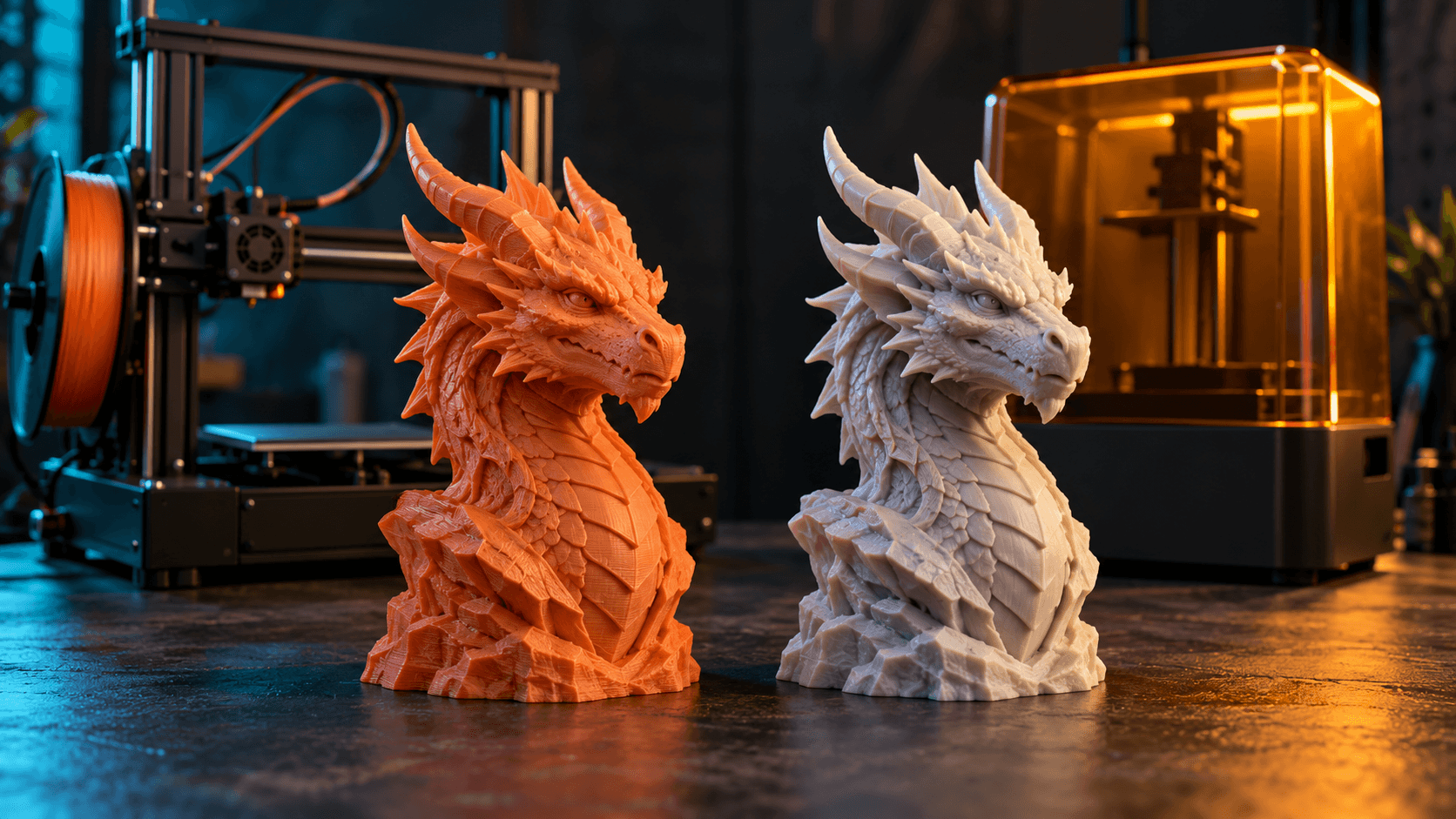
Discover the differences between FDM and resin 3D printers to decide which is the best option for your specific projects and needs.
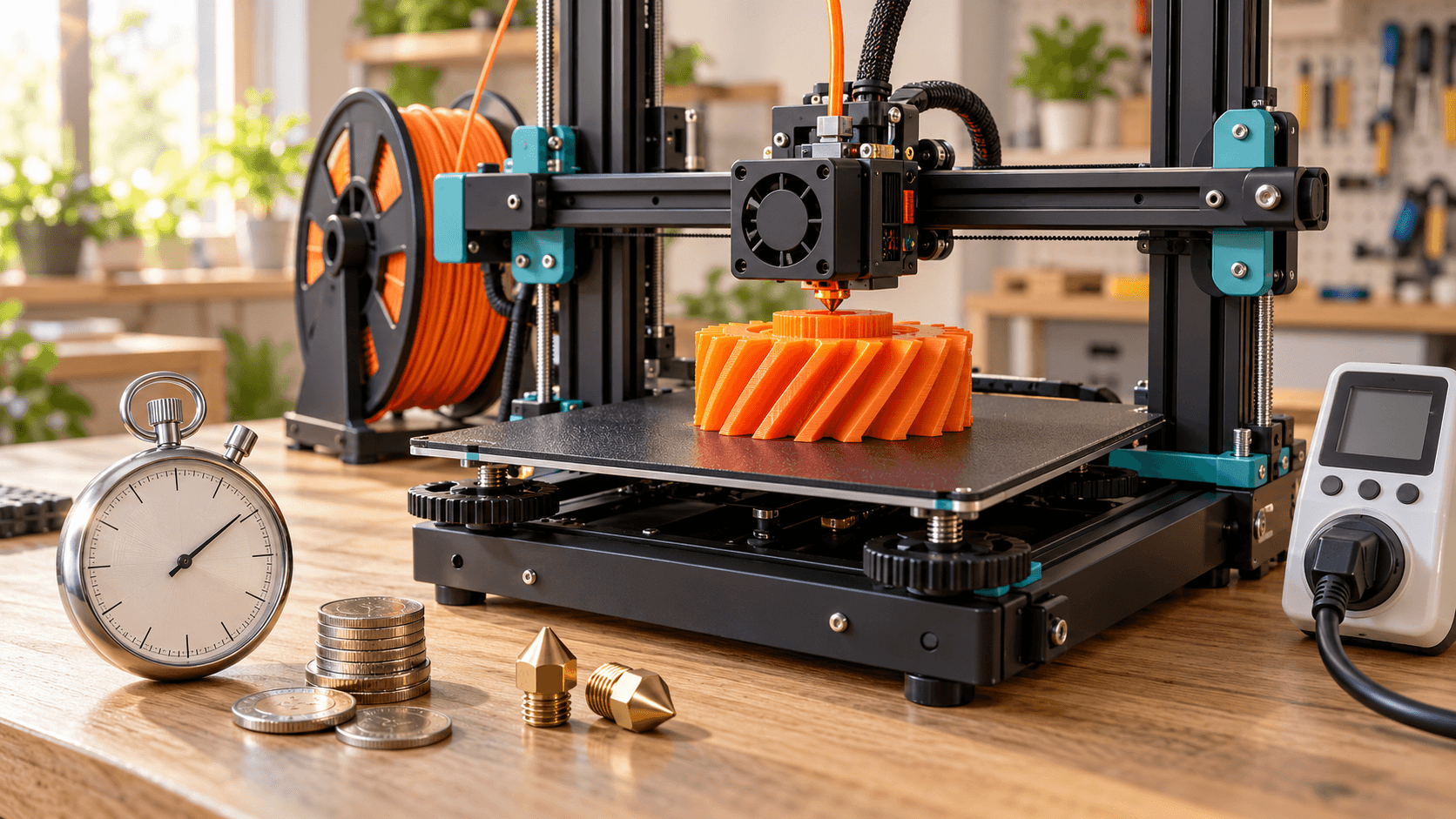
An hour on an FDM printer costs $0.12: depreciation, electricity and a failure reserve. The full calculation, and why hourly billing backfires.
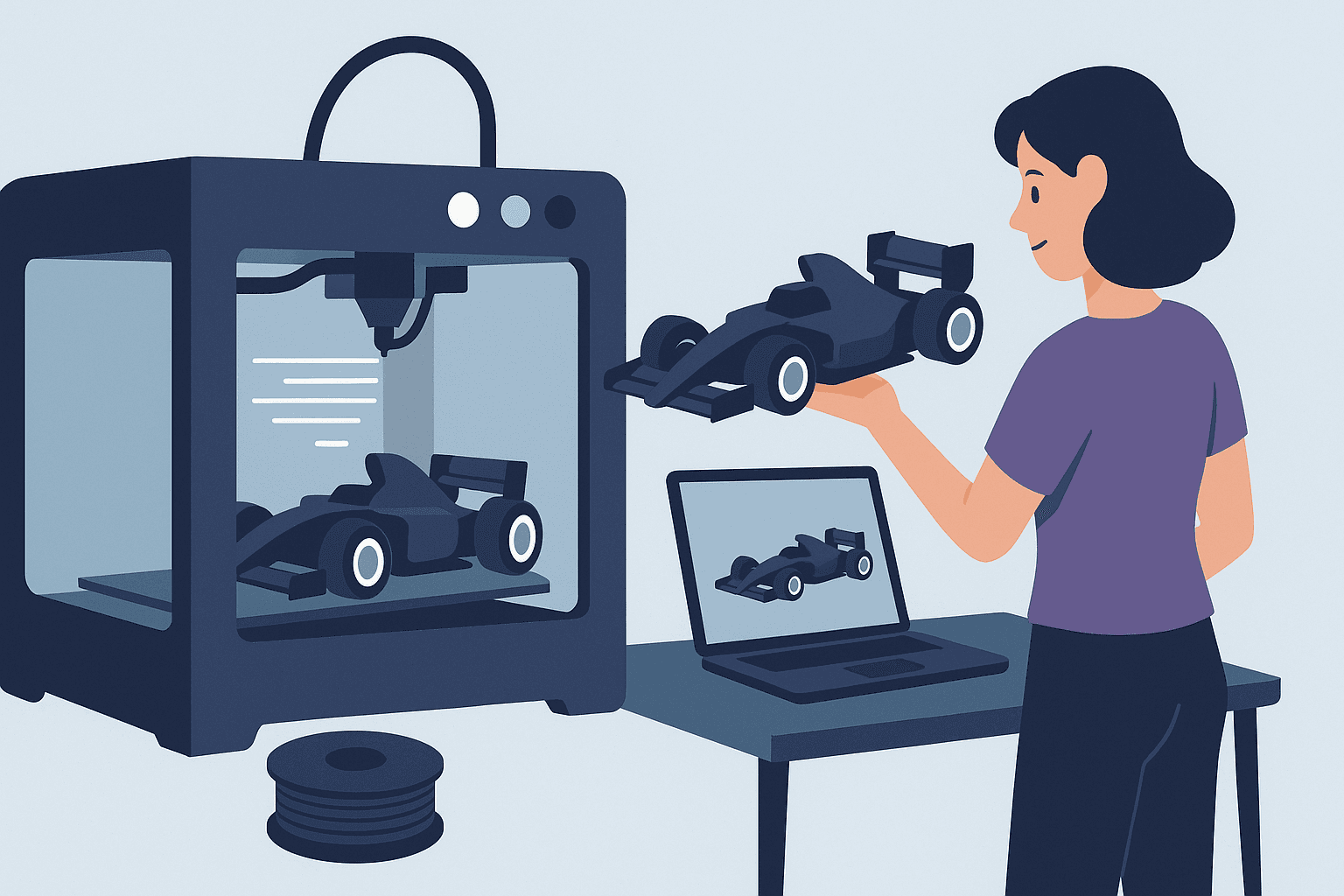
Discover how 3D printing is revolutionizing Formula 1 by enhancing design, reducing costs, and increasing team efficiency.