FDM 3D Printer or Resin: Which to Choose?
Discover the differences between FDM and resin 3D printers to decide which is the best option for your specific projects and needs.
Discover how 3D printing is revolutionizing Formula 1 by enhancing design, reducing costs, and increasing team efficiency.
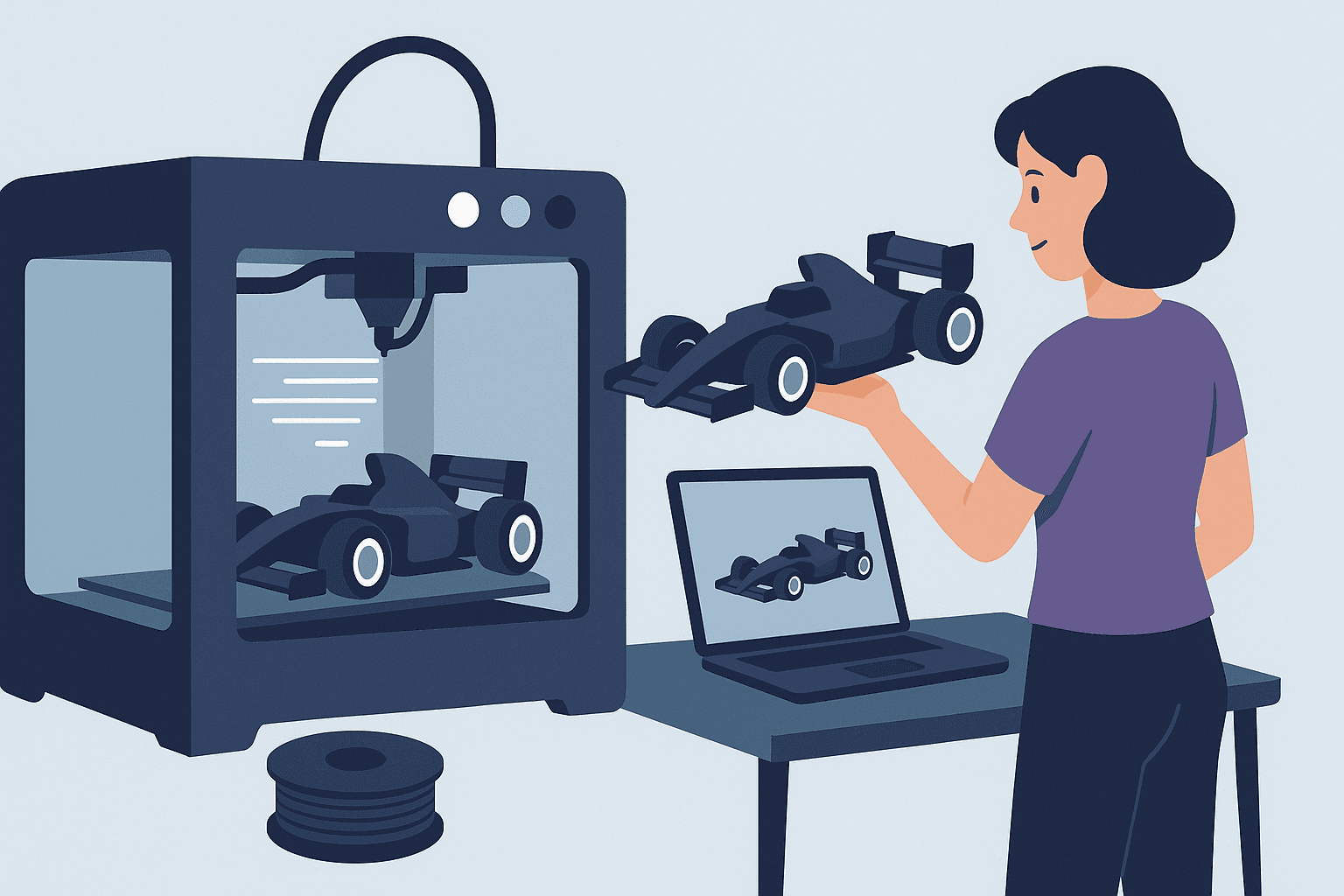
Formula 1 is one of the sports that benefits the most from cutting-edge technology. In recent years, 3D printing has emerged as a valuable tool for teams, enabling rapid and efficient innovations in the design and manufacturing of parts. The ability to create prototypes quickly is one of the biggest advantages of 3D printing in Formula 1. Teams can test and modify aerodynamic components, such as wings and diffusers, in a matter of days instead of weeks. This agility allows for constant adjustments, essential for optimizing car performance in every race.
A concrete example is the McLaren team, which uses 3D printing to manufacture over 9,000 parts per year. They employ this technology for both prototypes and final parts, such as sensor mounts and internal cockpit components. The ability to produce complex parts quickly and accurately helps the team stay competitive.
However, the application of 3D printing in Formula 1 is not without challenges. A common mistake is the improper choice of materials. While materials like nylon and aluminum are often used due to their strength and lightness, the wrong selection can lead to failures at high speeds or under extreme racing conditions. Additionally, 3D printing requires a balance between production speed and the quality of the final part. An improper adjustment of printing parameters can result in rough surfaces or parts that do not fit perfectly, compromising the car's aerodynamic efficiency. Therefore, teams invest in qualified professionals and state-of-the-art equipment to ensure that each part meets the rigorous quality standards required in Formula 1.
3D printing has revolutionized how Formula 1 teams approach the development of parts, offering a significant reduction in production time. With this technology, teams can create prototypes of aerodynamic parts or internal components in a matter of hours instead of weeks. This means that fine adjustments to the design can be tested in wind tunnels or computational simulations almost immediately, allowing teams to respond quickly to changes in regulations or performance discoveries during the season. For example, the Williams F1 team uses 3D printers to produce test parts for their cars, enabling rapid iteration and real-time feedback.
Another critical benefit is cost reduction. Traditionally, developing complex parts requires molds and specific tools, which are expensive and time-consuming to produce. With 3D printing, teams can manufacture complex components directly from a digital model, eliminating the need for costly tooling and reducing material waste. This is especially advantageous for parts with complex geometries, such as air ducts and suspension mounts, which can be produced with precision and lightness.
However, a common mistake is underestimating the importance of material selection. Not all 3D-printed polymers or metals have the strength or durability needed to withstand the extreme conditions of an F1 race. Teams must ensure that the materials used are suitable for the high temperatures and forces involved, or risk catastrophic failures. Thus, the correct choice of material is as critical as the design of the part itself.
In Formula 1, the choice of materials for 3D printing is crucial for the success of developing parts that need to withstand extreme conditions. Filaments like Bambu Lab PLA LITE are often used for initial prototypes due to their ease of use and cost-effectiveness. This material is ideal for quick testing and design adjustments before committing to more expensive and durable materials. However, it is important to note that PLA has limitations in terms of heat resistance and durability, making it unsuitable for components that will be subjected to high temperatures or significant mechanical stress.
For parts that require additional strength, PETG Creality is a popular option due to its durability and heat resistance. PETG combines the ease of printing of PLA with superior mechanical properties, making it suitable for parts that need to withstand the pressure and heat generated during high-speed racing. A practical example is the production of custom air ducts, which need to be not only aerodynamically efficient but also resistant to the heat generated by the engine and friction.
A common mistake when using PETG is not properly adjusting the print bed temperature, which can result in adhesion issues and warping. The ideal temperature varies, but is generally between 70°C and 80°C. Additionally, the printing speed should be adjusted to avoid structural failures, especially in complex parts. Using appropriate supports and correctly calibrating the printer are essential steps to ensure that the final parts meet the rigorous standards of Formula 1.
3D printing has revolutionized the design process in Formula 1 by allowing engineers to quickly test and adjust new concepts. With FDM technology, such as the Bambu Lab A1 Mini, teams can create models of complex parts in a matter of hours, facilitating the testing of different aerodynamic configurations in wind tunnels or computational simulations. A practical example is the development of front wings, where small design changes can have a significant impact on the car's performance. Engineers can print subtle variations of a wing design and quickly assess which configuration offers the best aerodynamic efficiency.
Moreover, 3D printing allows for the creation of complex geometries that would be impossible or extremely expensive to manufacture using traditional methods. For instance, internal cooling ducts, which need to be lightweight and highly efficient, can be prototyped and tested quickly. This accelerates the development cycle and enables teams to make last-minute adjustments before a race.
A common mistake when using 3D printing in Formula 1 is underestimating the importance of print orientation and material choice. Incorrect orientation can result in parts with insufficient mechanical strength, while improper material selection can lead to failures during high-load testing. Engineers need to carefully consider these variables to ensure that prototypes not only meet design requirements but are also functional under extreme conditions. With the right approach, 3D printing not only accelerates the design process but also offers unprecedented flexibility and innovation in the development of racing cars.
The ability to customize parts is a significant benefit in Formula 1, where every millisecond counts. Teams have the freedom to adjust components for each race, adapting to the specific conditions of the circuit, such as temperature, humidity, and asphalt abrasiveness. For example, a team may need to modify the geometry of a front wing to optimize downforce on a circuit with many tight corners. With 3D printers like the Elegoo Mars 5 Ultra 9K, it is possible to create detailed parts with high precision, which is essential for fine-tuning adjustments that can directly influence the car's performance.
A real example of 3D printing in Formula 1 is the customization of brake ducts. These components are critical for thermal management, and the ability to print them quickly allows teams to test different configurations in simulators before hitting the track. 3D printing enables design adjustments to maximize cooling and minimize aerodynamic drag, something that would take much longer using traditional manufacturing methods.
A common mistake when using 3D printing for customization in Formula 1 is underestimating the importance of material choice. Not all polymers and resins are suitable for withstanding the high temperatures and forces encountered during a race. Choosing the wrong material can result in catastrophic failures of the part during a race. Therefore, it is crucial to conduct rigorous validation testing before implementing a 3D-printed part on the car. 3D printing technology offers incredible flexibility, but it requires a deep understanding of materials and racing conditions to be used effectively.
3D printing is a powerful tool in reducing the weight of Formula 1 vehicles, a crucial aspect for improving performance and efficiency on the track. Through additive manufacturing technology, it is possible to create components with complex geometries that would be impossible to achieve with traditional manufacturing methods. This allows for the creation of optimized internal structures, such as lattices or honeycomb patterns, that provide high strength while significantly reducing the total mass of the part.
A concrete example of this advancement is the use of 3D-printed components in the suspension systems and air ducts of Formula 1 cars. The McLaren team, for instance, has adopted 3D printing to produce cooling system parts that are lighter yet maintain the efficiency needed for high-speed performance. These parts not only help reduce the overall weight of the vehicle but also allow for quick adjustments and prototype testing in a short timeframe, which is vital in a sport where every millisecond counts.
A common mistake when designing 3D-printed components for Formula 1 is underestimating the importance of post-processing. Often, the surfaces of printed parts require finishing to ensure that there are no flaws that could compromise structural integrity during a race. Ignoring this step can lead to catastrophic failures, especially in parts that bear high loads. Therefore, it is essential to integrate post-processing as part of the workflow to ensure that parts are not only lightweight but also safe and reliable.
The future of 3D printing in Formula 1 is promising and filled with opportunities for continuous innovations. Teams are constantly testing new materials, such as carbon fiber-reinforced polymers and metals like titanium, to create lighter and stronger parts. A concrete example is the use of 3D printing to produce complex aerodynamic components, such as wings and brake ducts, which can be rapidly prototyped and tested in wind tunnels.
A notable case is that of the McLaren team, which has adopted 3D printing to manufacture custom parts at record speed during the season. They have significantly reduced development time by printing parts directly at the track, allowing for quick adjustments and immediate testing. This not only improves operational efficiency but also provides a competitive edge by allowing the team to react swiftly to changing race conditions.
However, the application of 3D printing in Formula 1 is not without challenges. A common mistake is underestimating the importance of post-processing. 3D-printed parts often require additional finishing to ensure they meet the rigorous quality and safety standards of Formula 1. Ignoring this step can result in catastrophic failures during a race. Additionally, there is the issue of repeatability and consistency in large-scale production of parts, which remains a point of attention for engineers and manufacturers.
With the continuous advancement of 3D printing technology and the development of new materials, Formula 1 is well-positioned to fully explore the potential of this technology, transforming it into an indispensable tool for the design and manufacture of high-performance parts.
3D printing offers cost reduction, rapid prototyping, and customization of parts, which is crucial for team performance.
Filaments like PLA and PETG are common, chosen for their ease of use and strength, respectively, depending on the application.
It allows for quick and precise adjustments to adapt components to the specific conditions of each race, improving performance.
3D printing enables the creation of lightweight parts with optimized structures, reducing the overall weight of the vehicle without compromising strength.
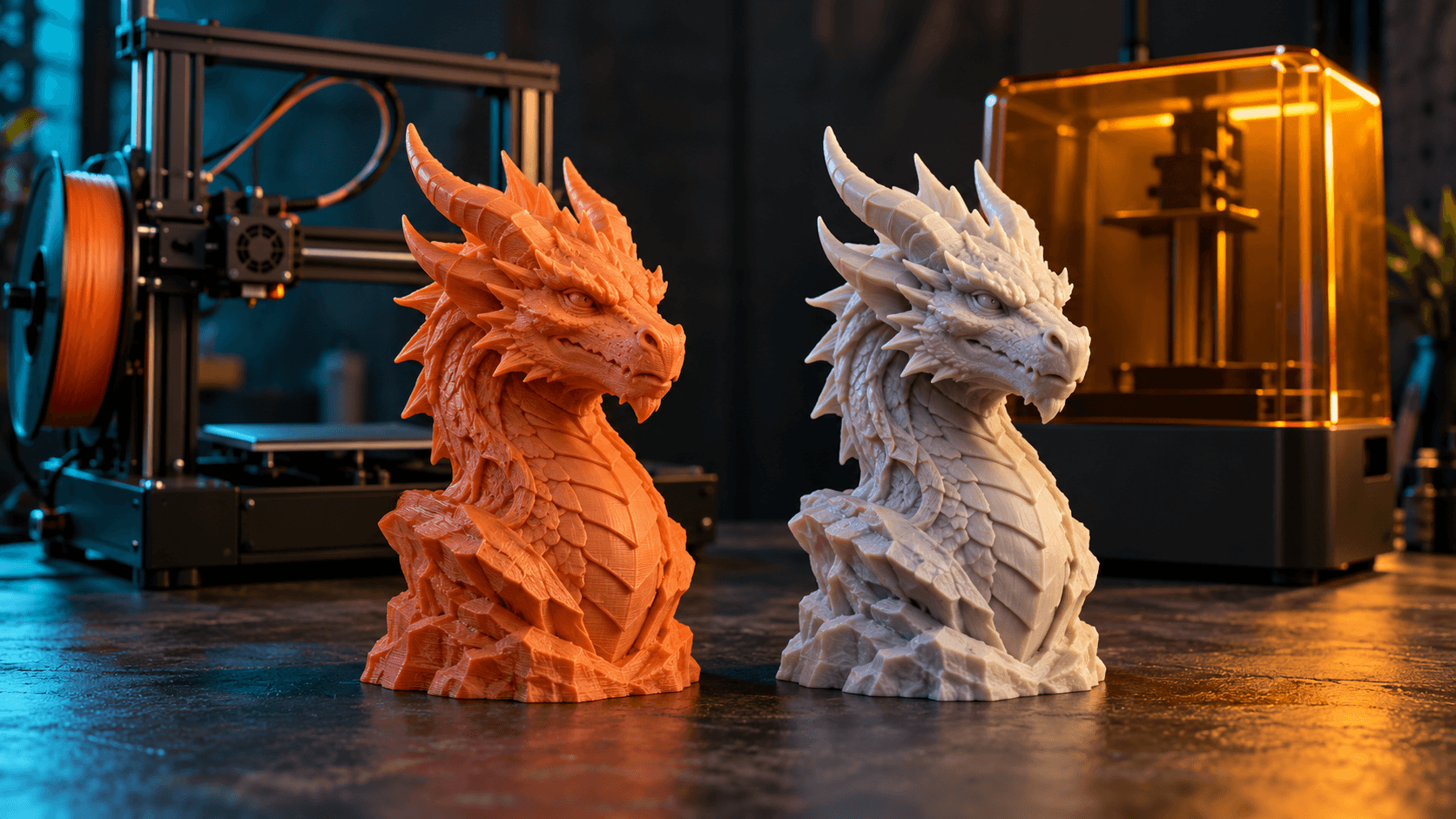
Discover the differences between FDM and resin 3D printers to decide which is the best option for your specific projects and needs.
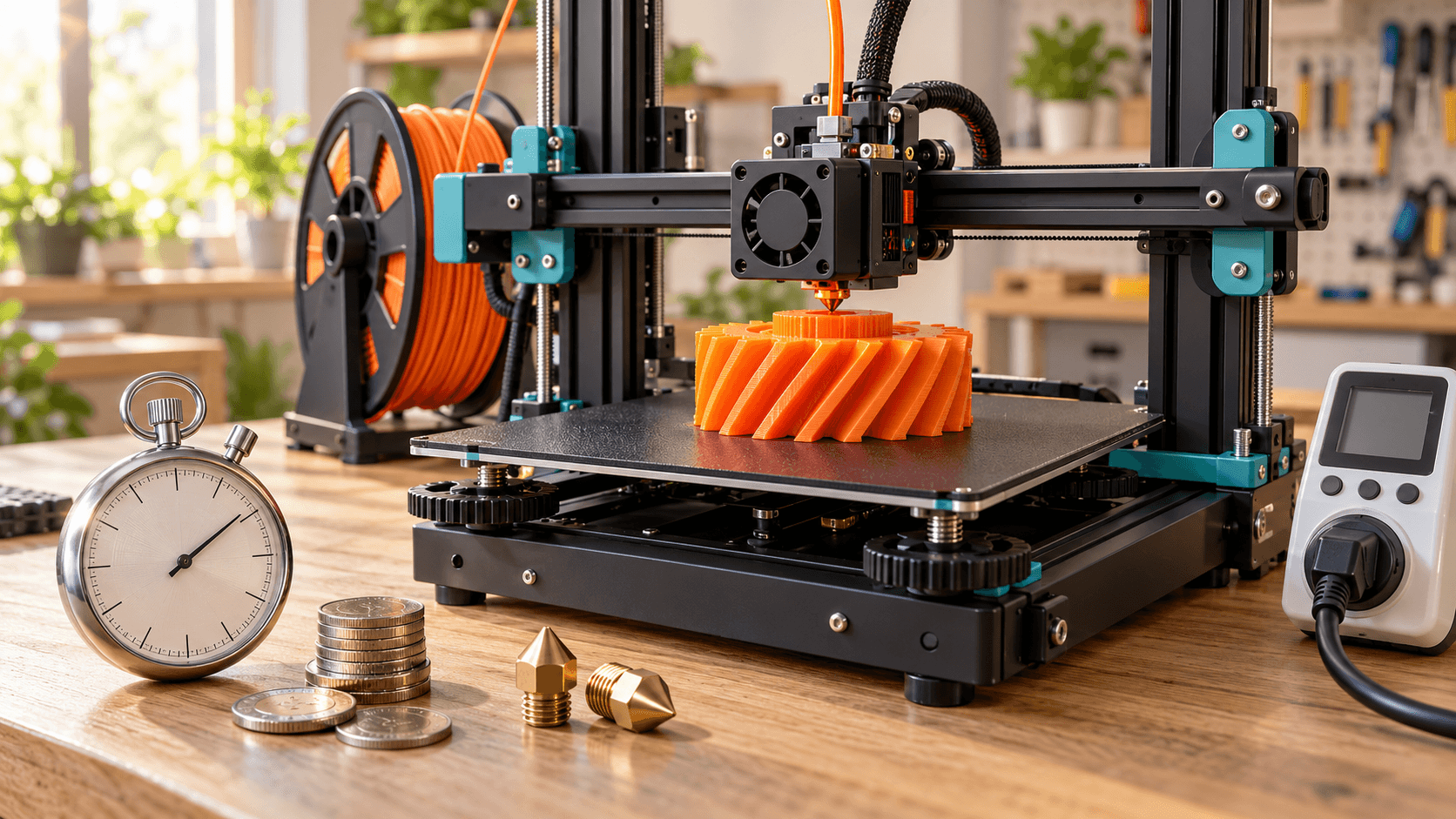
An hour on an FDM printer costs $0.12: depreciation, electricity and a failure reserve. The full calculation, and why hourly billing backfires.
Discover how engineering and 3D printing are transforming design and production, offering innovative and customized solutions across various sectors.