Differences Between 3D Printers
Discover the main differences between FDM and resin 3D printers, and how to choose the best option for your printing needs.
How many metres and how many parts come out of 1kg of filament, by material — with the density table and the formula for your own spool.
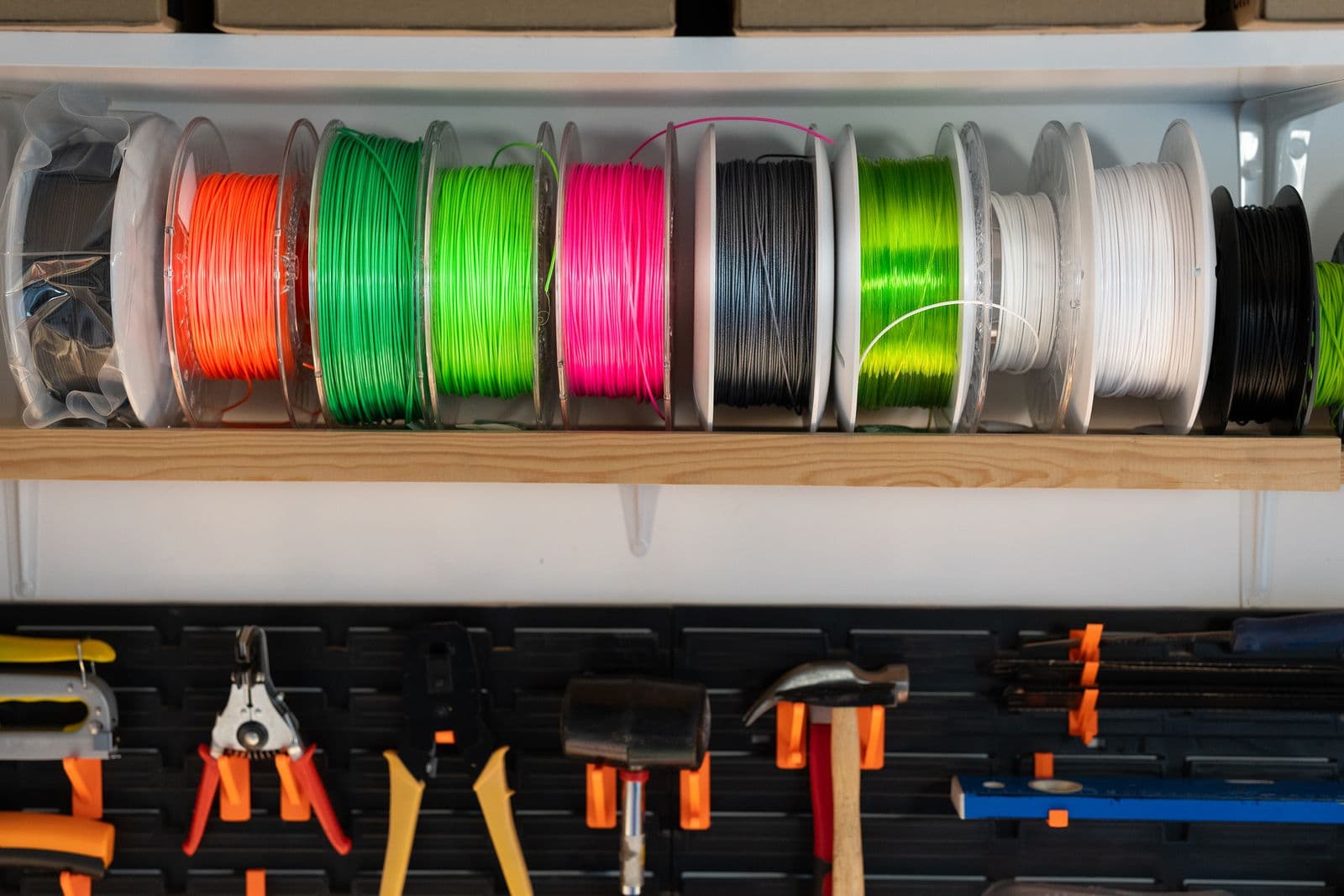
Short answer: a 1 kg spool of PLA in 1.75 mm holds about 335 metres (1,100 ft). PETG gives ~327 m, ABS ~400 m, TPU ~344 m. The difference isn't the brand — it's the density of the plastic. Below is the table for every material, how many parts a spool actually makes, and the formula to work it out for your own roll.
Filament is a long cylinder. Each metre weighs the density of the plastic times the cross-sectional area. Since density changes from material to material, the same kilo gives very different lengths.
| Material | Density | Grams per metre | Metres per kg |
|---|---|---|---|
| ABS | 1.04 g/cm³ | 2.50 g | ~400 m |
| ASA | 1.07 g/cm³ | 2.57 g | ~389 m |
| Nylon (PA6) | 1.14 g/cm³ | 2.74 g | ~365 m |
| TPU (95A) | 1.21 g/cm³ | 2.91 g | ~344 m |
| PLA | 1.24 g/cm³ | 2.98 g | ~335 m |
| PETG | 1.27 g/cm³ | 3.05 g | ~327 m |
Note what that contradicts: ABS gives MORE metres per kilo than PLA, not fewer. It's the least dense material on the list, so the same weight yields about 65 metres more. That's the opposite of what most people assume — and of what a lot of articles repeat.
If your filament is a specialty blend — PLA+, silk, matte, carbon-fibre or wood-filled — the density shifts and the table above becomes an approximation. The formula is simple:
metres per kg = 1000 ÷ (density × 2.405)
The 2.405 is the cross-sectional area of 1.75 mm filament, in cm². Density is usually on the manufacturer's data sheet. If it isn't, measure it: weigh exactly one metre on a precision scale and divide by 0.02405 — that gives density in g/cm³.
2.85 mm filament (still used on Ultimaker and some older machines) has a cross-section 2.65 times larger. The same kilo gives 2.65 times fewer metres: 1 kg of PLA in 2.85 mm is about 126 metres, not 335. Same weight, much shorter roll — but the volume of plastic is identical, so the number of parts doesn't change.
Metres aren't the useful unit when you're quoting a job. Parts are. These figures assume 15% infill and 2 perimeters, the default most slicers use for decorative pieces:
| Part | Typical weight | Per kg |
|---|---|---|
| Keychain / small figurine (~5 cm) | 8–15 g | 65 to 125 |
| Desk figurine (~6 cm) | 15–30 g | 33 to 65 |
| Phone stand | 40–80 g | 12 to 25 |
| Medium decorative vase (15 cm) | 80–150 g | 6 to 12 |
| Drawer organiser | 120–200 g | 5 to 8 |
| Large functional part (case, cabinet) | 150–300 g | 3 to 6 |
| Cosplay helmet (printed in sections) | 600–900 g | 1, with little left over |
At $15 to $20 per kilo, each gram costs about 1.5 to 2 cents in material. So that 20 g figurine is well under a dollar in plastic.
But material isn't cost. Adding power, nozzle and build-plate wear, and a reserve for failed prints, real production cost lands between 3 and 5 cents per gram — roughly double the filament alone. Anyone quoting on plastic only is working for free.
Instead of using these averages, run your own numbers: the FDM cost calculator takes your filament price, your electricity rate and your machine's depreciation — and exports a PDF quote for the client.
A question that comes up every week, and the answer is a kitchen scale. Weigh the whole spool and subtract the empty spool weight — usually printed on the label, and typically 180 to 250 g for a plastic core. What's left is filament.
With the grams in hand, the table above already tells you how many parts remain. For metres, multiply grams by the factor from the first table: 335 ÷ 1000 for PLA, so 400 g of PLA ≈ 134 metres.
For beginners and for ninety per cent of parts, PLA: easy to print, doesn't warp, needs no enclosure, and it's the cheapest. PETG when the part will see sun or heat. ABS and ASA only with an enclosed machine.
One warning that saves spools: PLA and PETG absorb moisture. Filament left open for weeks pops at the nozzle, prints dull and brittle, and the owner blames the printer. A sealed bag with desiccant prevents it; an already-wet spool needs drying.
Want the full cost per part, not just filament? See How Much Does 3D Printing Cost. Still choosing a machine? The 10 best 3D printers of 2026 or the printer database.
Densities checked against manufacturer data sheets; specialty spools (silk, matte, fibre- or wood-filled) vary by a few per cent. We participate in the Amazon and AliExpress affiliate programmes and earn from qualifying purchases made through the links above.
In 1.75 mm: PLA gives about 335 metres, PETG 327, TPU 344, nylon 365, ASA 389 and ABS about 400. The difference is the density of the plastic, not the brand. In 2.85 mm filament the same kilo gives 2.65 times fewer metres: 1kg of PLA is about 126 metres.
At 15% infill: 65 to 125 keychains, 33 to 65 small figurines, 12 to 25 phone stands, 6 to 12 medium vases, or 3 to 6 large functional parts. A cosplay helmet eats almost the whole spool.
ABS, at about 400 metres per kilo — precisely because it is the least dense on the list (1.04 g/cm3) against PLA at 1.24. Contrary to what is often repeated, ABS gives MORE metres than PLA, not fewer. PETG gives the least, at 327 metres.
Weigh the spool on a kitchen scale and subtract the empty spool weight, usually printed on the label and typically 180 to 250 g for a plastic core. To convert to metres, multiply grams by 0.335 for PLA.
In material, about 1.5 to 2 cents per gram — a 20 g figurine is well under a dollar in plastic. But real production cost, adding power, wear and a reserve for failed prints, lands between 3 and 5 cents per gram. Quoting on plastic alone means working for free.
Discover the main differences between FDM and resin 3D printers, and how to choose the best option for your printing needs.
Discover the differences between FDM and resin 3D printers to decide which is the best option for your specific projects and needs.
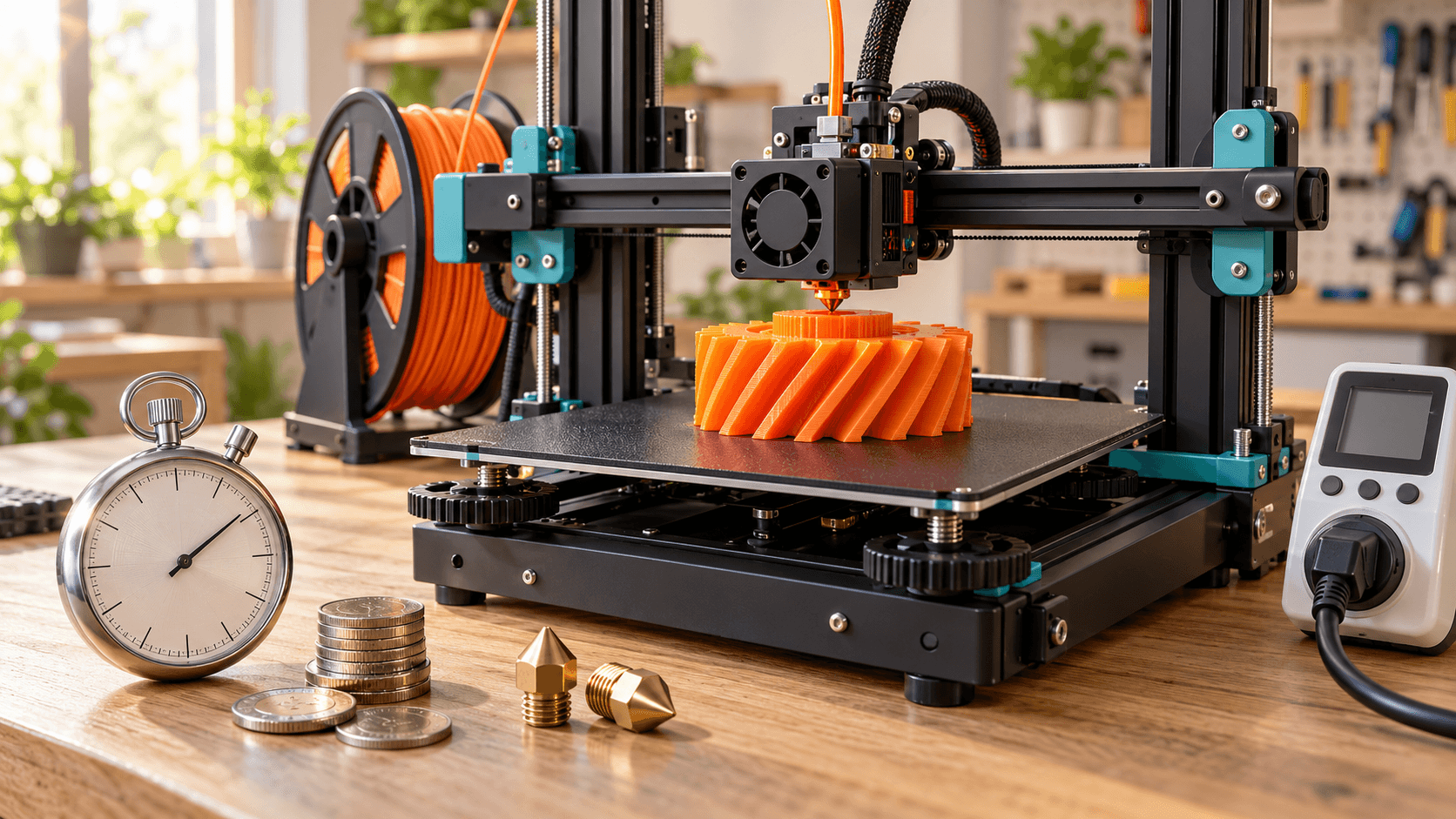
An hour on an FDM printer costs $0.12: depreciation, electricity and a failure reserve. The full calculation, and why hourly billing backfires.