Applications of 3D Printing in Formula 1
Discover how 3D printing is revolutionizing Formula 1 by enhancing design, reducing costs, and increasing team efficiency.
Print volume, resolution, speed, enclosed or open frame: what each spec on the sheet really means before you compare 3D printer prices.
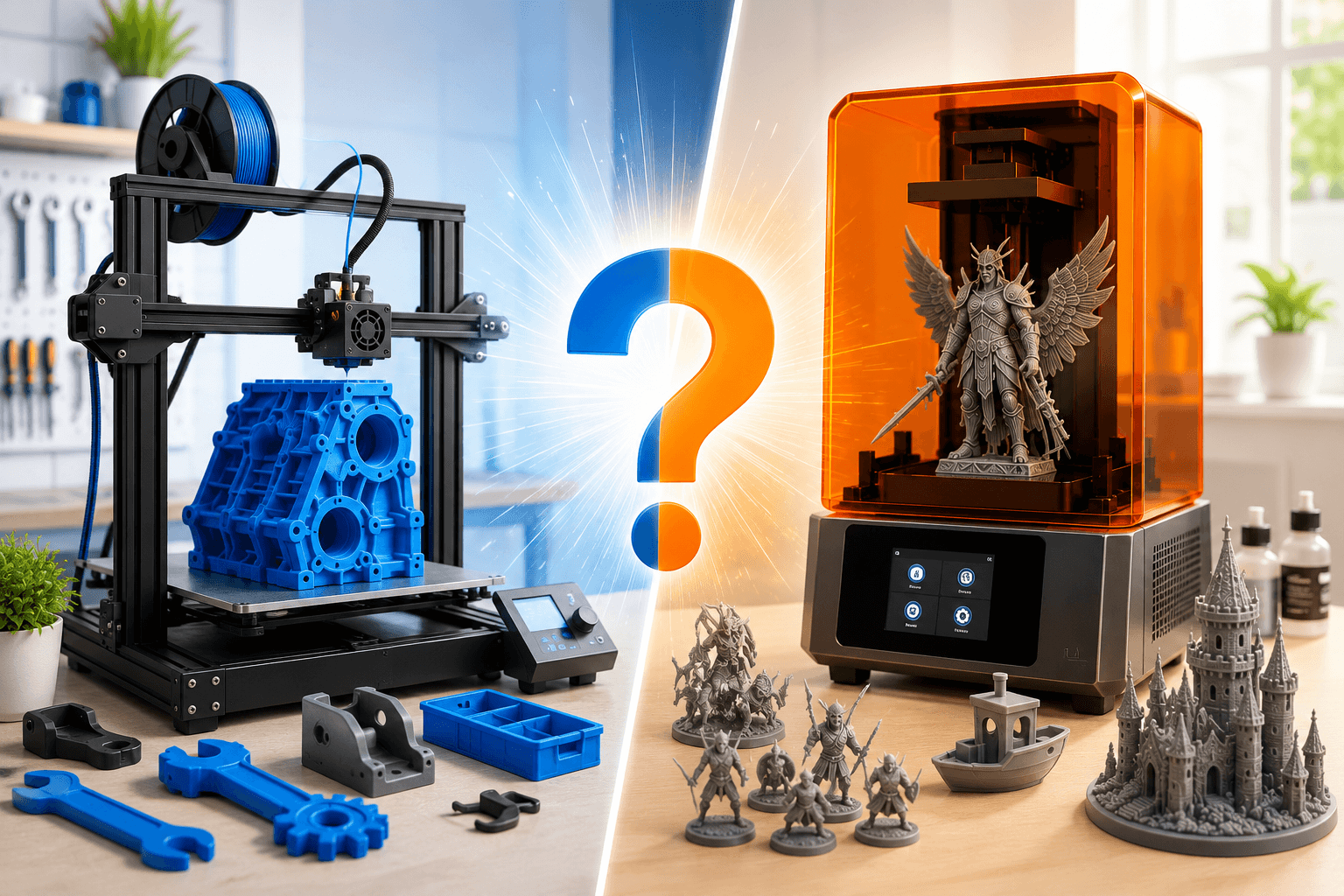
Two printers can cost the same and be built for completely different jobs. Before comparing price, it helps to understand what each spec on the sheet actually changes in daily use.
This is the largest part that fits on the bed, in millimeters (width x depth x height). A 180x180x180mm printer handles miniatures and small parts just fine; for a cosplay helmet or a piece of furniture, volume is the first filter, before any other spec.
In FDM, finish quality comes from layer height (0.1 to 0.3mm) and nozzle diameter — high resolution in FDM is about tuning, not a fixed spec of the machine.
In resin, resolution comes from the LCD screen, measured in K (pixel count): 4K, 9K, 12K, 16K. The higher the K, the finer the detail — that's why resin dominates miniatures and FDM dominates large functional parts.
Print speed (mm/s) matters, but parts with heavy supports or dense infill take longer regardless of the machine's rated speed. A printer that's "faster" on paper may not save real time if the part needs more prep work.
An enclosed printer keeps temperature stable — essential for printing ABS and other materials that warp from air drafts. Open frame is cheaper and works well for PLA and PETG, which don't need that control.
Direct drive (motor right above the nozzle) pushes flexible filament (TPU) without jamming. Bowden (motor away from the nozzle) keeps the hotend lighter and faster, but struggles more with flexible material.
Systems like Bambu Lab's AMS switch color or material on their own during a print. Without it, multi-color means swapping filament by hand or slicing separate parts and gluing them later.
Two printers with the same resolution can have very different prices because of speed, an enclosed frame, or automatic material swapping — not necessarily because one prints better. Deciding your USE CASE first (miniatures, functional parts, production) keeps you from paying for a feature you won't use.
See the full comparison in the printer database.
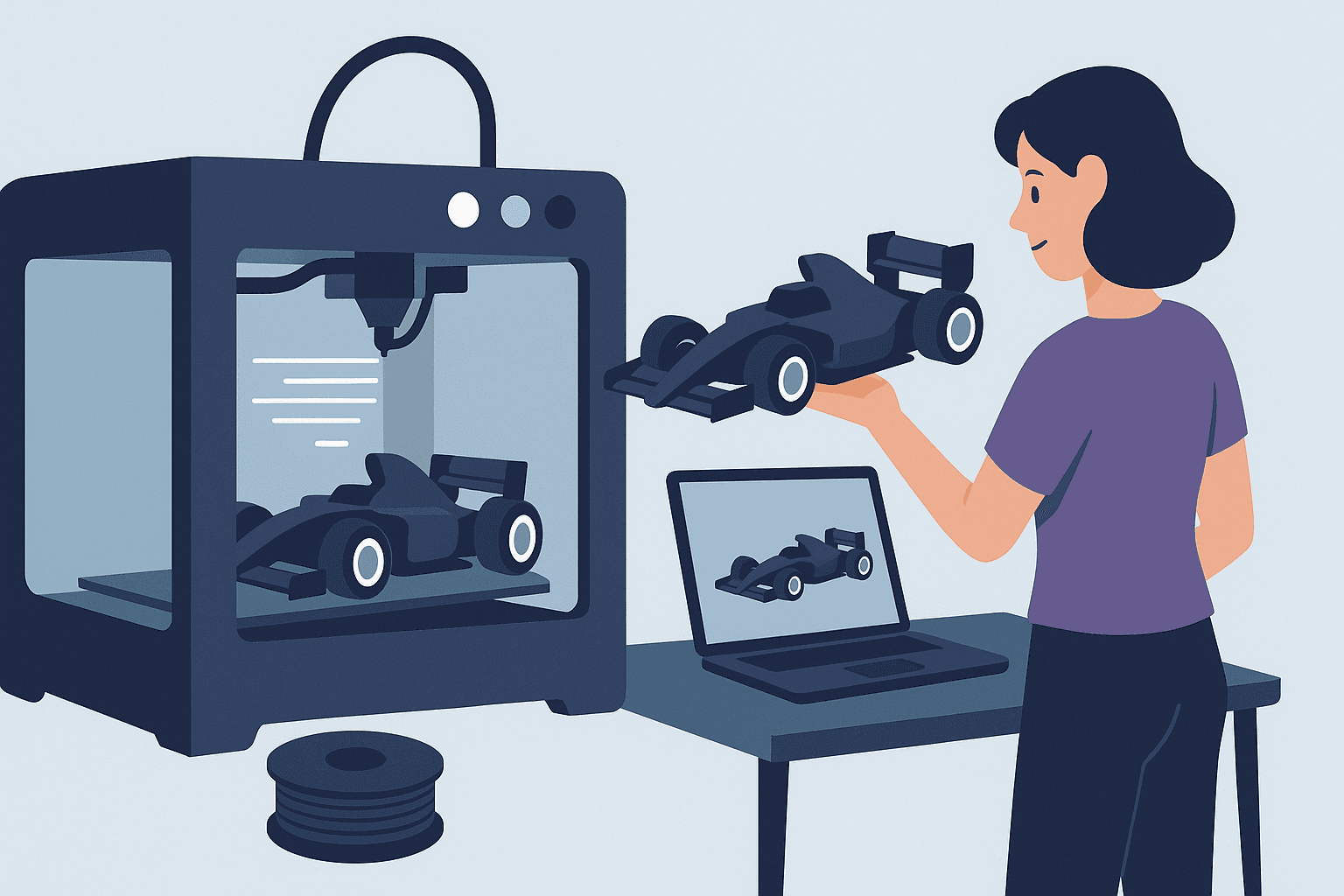
Discover how 3D printing is revolutionizing Formula 1 by enhancing design, reducing costs, and increasing team efficiency.
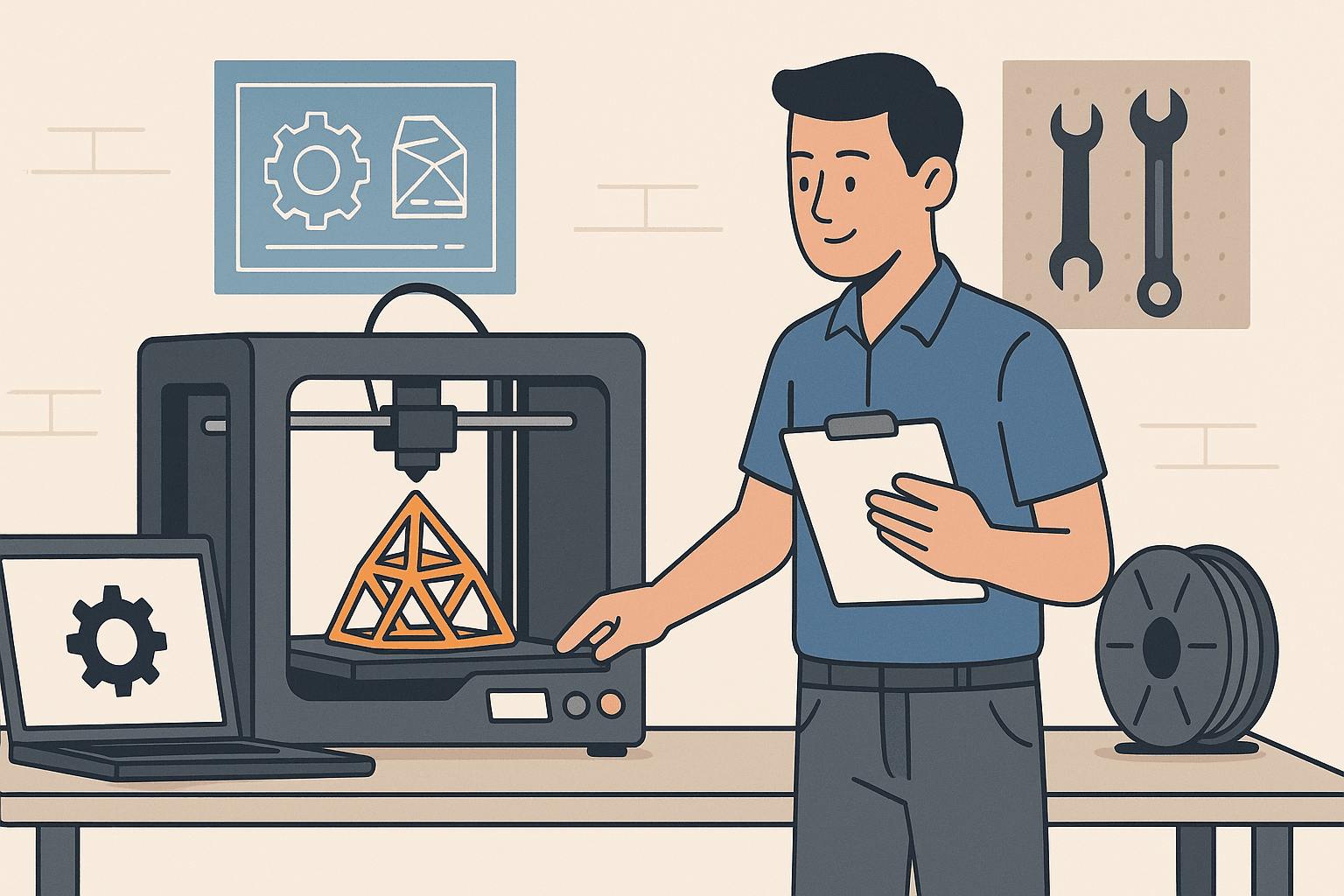
Discover how engineering and 3D printing are transforming design and production, offering innovative and customized solutions across various sectors.

Discover the key features of 3D printers and choose the ideal one for your project with our comparative table. Find out the differences now!