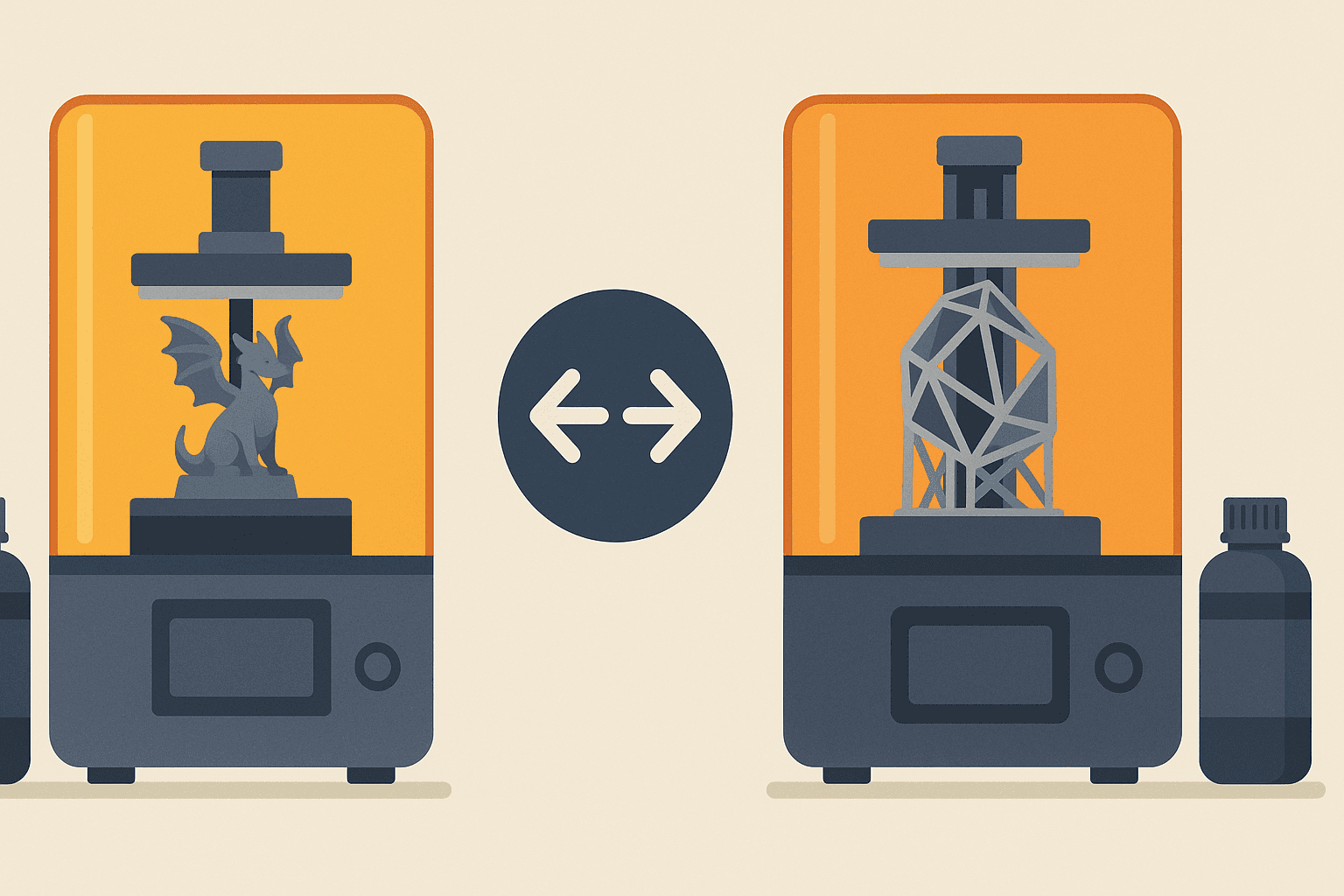
完全ガイド:3Dプリンター比較表
3Dプリンターの主要な特徴を知り、比較表を使ってプロジェクトに最適なものを選びましょう。今すぐ違いを発見してください!
Cost per gram, the full per-part calculation, FDM against resin, what print services charge and what to charge yourself — the method, not guesswork.
Quick answer: a small PLA part of up to 50 g costs roughly $1 to $3 to produce, counting filament, electricity and machine wear. A 30 ml resin miniature runs about $2 to $5. The rule underneath those numbers is simple: the real cost of a print is two to three times the value of the material it consumes.
Count only the filament or the resin and you will be well under — which is how most people end up selling below cost without noticing. This article covers both sides of the question: what a print costs you if you own the printer, and what it should cost if you are paying someone else to print it.
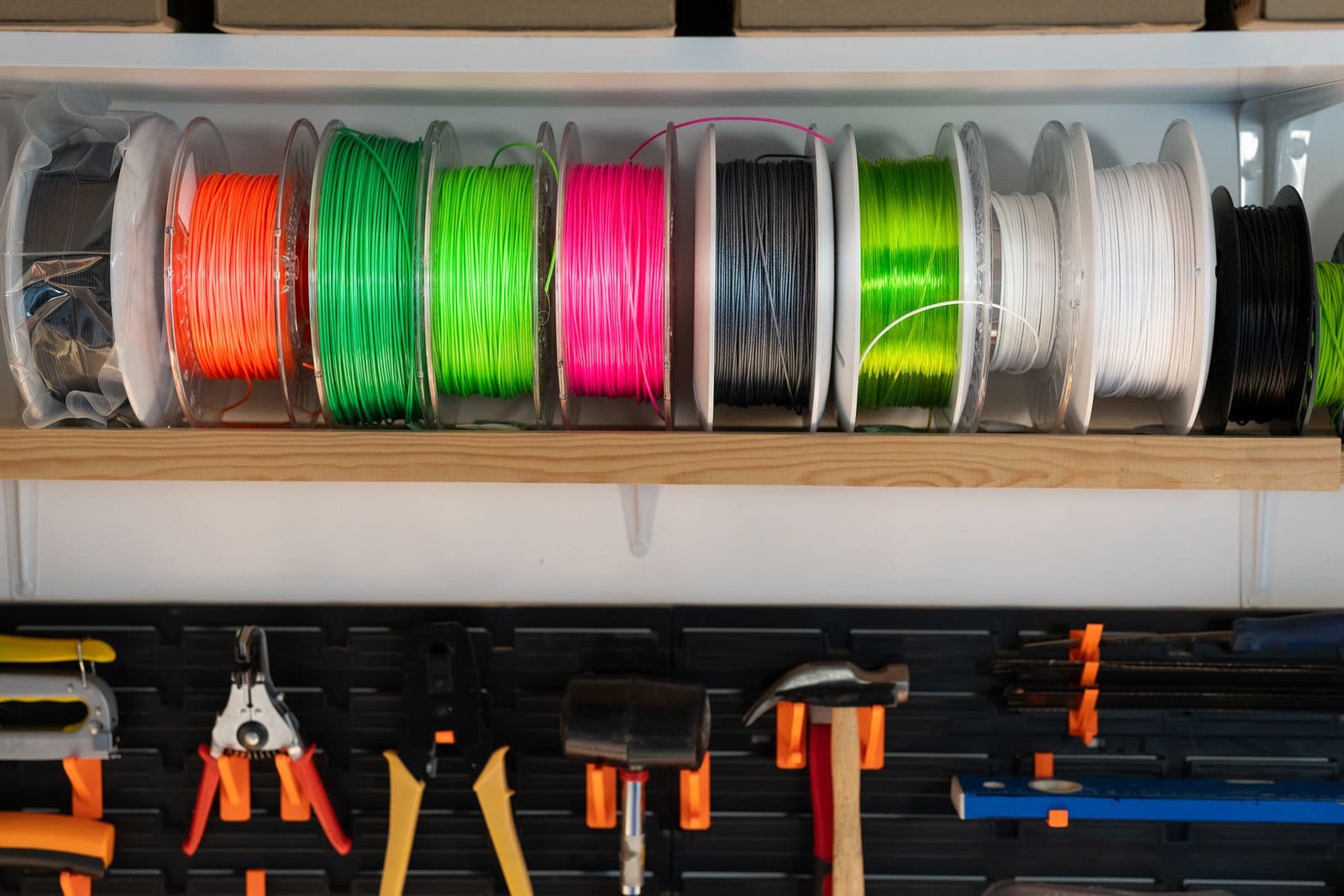
The material share is quick to work out. Take the spool price and divide by 1,000 — that is your material cost per gram. PLA filament averages $15 to $25 per kilo, so material alone lands at $0.015 to $0.025 per gram. A 40 g part consumes 40 times that.
But that figure describes the material, not the production. Once you add electricity, machine depreciation and the prints that fail, the real production cost sits closer to $0.04 to $0.07 per gram. That is the two-to-three multiplier in practice, and it is more useful than any absolute figure because the ratio holds whatever currency you buy in.
Material actually used. Not the whole spool — the grams that end up in the part, plus what goes into supports, skirt and purge. Your slicer reports this before you print, and it is the only line most people count.
Electricity. Printer wattage times print hours times your price per kWh. On FDM this is smaller than most people expect: the heated bed draws more than the hotend, and both cycle rather than run continuously.
Machine depreciation. Purchase price divided by expected service hours gives you a cost per hour that belongs in every job. Skipping this line is the single most common reason hobbyists undercharge — the machine wears out invisibly until it needs parts nobody budgeted for.
Consumables. Nozzles wear, build surfaces lose adhesion, belts stretch. On resin, add isopropyl alcohol, FEP film and the LCD's exposure life. Each has a cost per print once you divide by how long it lasts.
A failure allowance. Nobody prints at a 100% success rate. Budgeting 5 to 10% on top of production cost covers the failed prints without eating your margin.
Your time. Setup, monitoring, support removal, sanding. On resin, washing and curing are mandatory rather than optional. This is the line hobbyists leave out and professionals never do.
Notice what the spread between cost and price tracks: not weight, but how hard the part is to get right. The miniature costs less to produce than the phone stand and sells for more, because resin detail is what the buyer cannot reproduce themselves.
Per part, FDM wins. Filament goes a long way and brings no extra consumables. A spool sits on a shelf between jobs and costs nothing while it waits.
Resin costs more per litre and drags a chain of consumables behind it: alcohol that gets dirty and must be replaced, FEP film good for 20 to 60 prints, an LCD screen rated in exposure hours, plus gloves and paper towel on every single part.
What resin buys you is detail FDM cannot reach — and that is where the margin lives. Miniatures, jewellery and fine-fit prototypes sell at multiples of their cost precisely because FDM cannot produce them. Filament wins on volume; resin wins on value.
The full resin breakdown, item by item, is in The Real Cost of Resin 3D Printing. For how the materials themselves compare, see 3D printing material costs.
If you do not own a printer, you are asking a different question — and the answer has a different shape.
Print services generally price on some combination of material volume, machine time and post-processing, with a minimum order that covers setup. That minimum is why a tiny part often costs almost as much as a medium one: the labour of preparing the job does not shrink with the part.
Expect meaningful differences by process. FDM is the cheapest quote you will get. Resin costs more for the same volume, because of the consumables and the mandatory washing and curing. SLS costs more again but needs no supports, so complex geometry does not add to the bill the way it does elsewhere. Metal sits in another category entirely — machine, inert atmosphere and mandatory heat treatment dominate the price, which is why printed metal competes on geometry rather than cost.
When comparing quotes, check what is included. Some prices assume you accept the part as it comes off the plate, supports and all, and finishing is what turns a cheap quote into an expensive one.
The honest test is volume. A machine only pays for itself once the per-part saving times the parts you actually print exceeds the purchase price plus the months you spend learning it. Print twice a year and a service is cheaper; print every week and the machine wins quickly.
Where the tiers sit today:
Full breakdown by price tier in How Much Does a Good 3D Printer Cost. Not sure which to buy? Answer three questions in the printer recommender or compare models side by side in the printer database.
The common rule in the maker market is total cost multiplied by 1.5 to 2.0 — a 50 to 100% markup. Add your modelling and finishing time, and shipping.
The critical detail is that the multiplier applies to total cost, not to the material price. Apply it to filament alone and you are selling below cost, and you will only find out months later when the machine needs parts you did not budget for.
Custom work, rush jobs and anything requiring design time justify a higher multiplier. Repeat production of a proven part justifies a lower one, because the failure rate is known and the setup is already done.
Stop estimating: the FDM calculator and the resin calculator work from your own material and energy prices, and generate a branded PDF quote for your client. Already have the file? Drop the STL or 3MF in and the volume comes straight from the geometry — see calculating from the file.
We participate in the AliExpress affiliate program and earn from qualifying purchases made through the links above.
Divide the spool price by 1,000 for material cost per gram — with PLA at $15-25 per kilo, that is $0.015-0.025. But that is material only. Adding electricity, machine depreciation, consumables and failed prints brings real production cost to roughly $0.04-0.07 per gram.
A small PLA part up to 50g costs $1-3 to produce; a 30ml resin miniature runs $2-5. Cost tracks weight and print time rather than size. The reliable rule is two to three times the value of the material consumed, which accounts for energy, machine wear, consumables and a failure allowance.
FDM is cheaper per part: filament goes further and brings no extra consumables. Resin costs more per litre and adds alcohol, FEP film and LCD wear. But resin reaches detail FDM cannot, which is why miniatures and fine prototypes sell at higher margins. Filament wins on volume, resin on value.
Most price on material volume, machine time and post-processing, with a minimum order covering setup — which is why a tiny part can cost nearly as much as a medium one. FDM quotes lowest, resin higher, SLS higher still but without support costs, and metal in a category of its own. Always check whether finishing is included.
The maker-market norm is total cost times 1.5 to 2.0, plus your modelling and finishing time and shipping. The decisive point is applying the multiplier to total cost rather than to the material price alone — doing the latter means selling below cost without realising it.