Réponse courte : le coût d'une impression dépend beaucoup moins du prix du filament qu'on ne le croit. Qui ne compte que la matière tombe largement en dessous du réel : en pratique, le coût véritable vaut deux à trois fois la valeur de la matière seule.
Établir correctement le coût au gramme
La part matière se calcule vite : prix de la bobine divisé par 1 000, et vous avez le prix au gramme. Sauf que ce chiffre ne décrit pas encore un coût de production. Il faut y ajouter l'électricité, l'amortissement de la machine par heure de fonctionnement et une réserve pour les impressions ratées.
Règle pratique : comptez deux à trois fois le prix de la matière seule. Cette fourchette reste valable quelle que soit la monnaie dans laquelle vous achetez — contrairement aux montants absolus, qui varient selon le marché et le mois.
Ce qui fait réellement le prix
- Le poids de la pièce, pas sa taille. Un boîtier creux peut peser moins qu'un petit bloc plein.
- Le temps d'impression — il détermine l'électricité et l'amortissement, et il croît avec la hauteur, pas avec la surface au sol.
- Le remplissage et l'épaisseur des parois. Passer de 15 % à 40 % de remplissage double presque la matière sans rendre la pièce deux fois plus solide.
- Les supports, qui finissent intégralement à la poubelle et sont pourtant payés.
- Le taux d'échec. Calculer sur cent pour cent de réussite, c'est calculer trop bas.
Ce qui figure vraiment sur la facture
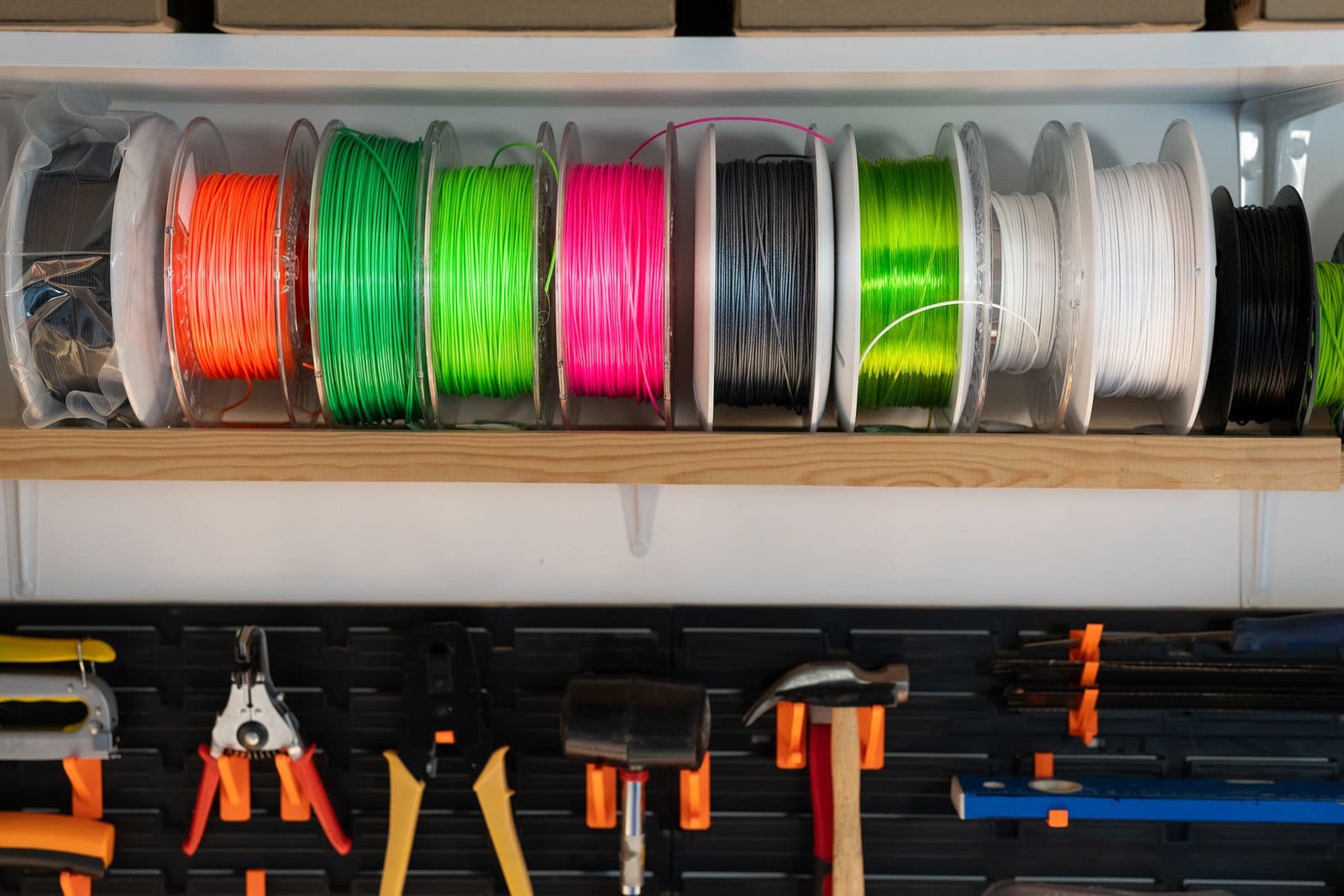
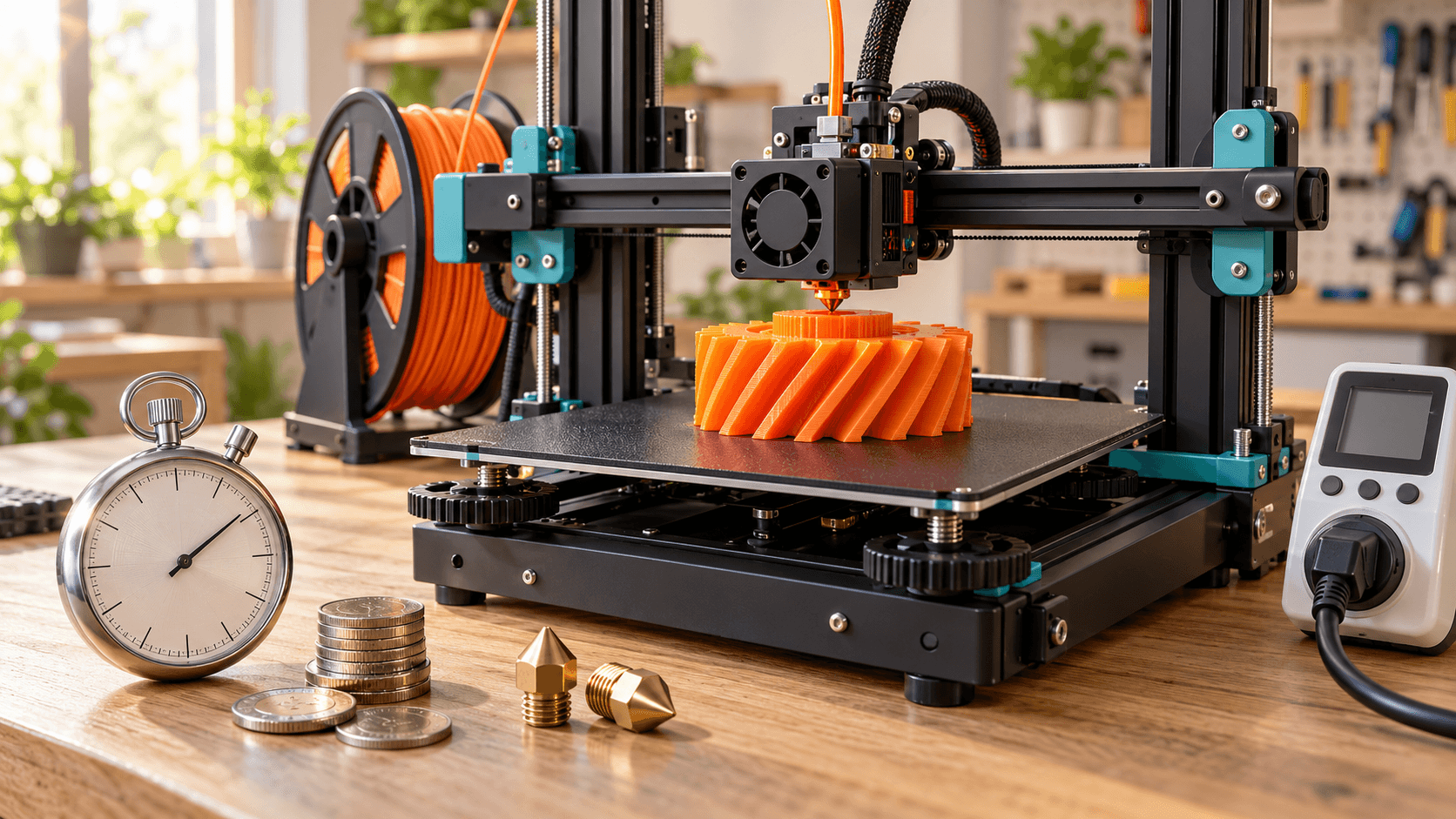
Un filament régulier évite les reprises, et ce sont elles qui mangent la marge — par exemple une bobine standard de PLA+ ELEGOO 1,75 mm. Côté usure, la buse est le poste que tout le monde oublie : un jeu de buses MK8 coûte peu et doit quand même entrer dans le calcul, parce qu'une buse usée dégrade la qualité en silence.
Le prix d'achat de la machine n'entre pas en entier dans une pièce : il se répartit sur sa durée de vie. Divisez ce prix — pour une machine d'entrée de gamme comme la ELEGOO Neptune 3 — par les heures de fonctionnement attendues, et vous obtenez la part d'amortissement horaire.
Pour savoir quelle machine vous convient, trois questions suffisent dans le guide d'achat. Les caractéristiques côte à côte sont dans la base de données.
FDM ou résine : lequel revient moins cher ?
Par pièce, le FDM est moins cher. Le filament dure longtemps et n'entraîne aucun consommable supplémentaire. La résine coûte plus au litre et implique alcool isopropylique, film FEP et un écran LCD à durée de vie limitée. En échange, elle atteint un niveau de détail hors de portée du FDM — et c'est précisément là que se loge la marge.
Le calcul complet pour la résine, poste par poste, est dans Le vrai coût de l'impression résine.
Combien facturer une impression ?
La règle courante chez les makers : coût total multiplié par 1,5 à 2,0, soit cinquante à cent pour cent de marge. Ajoutez votre temps de modélisation et de finition, ainsi que l'expédition. Les pièces sur mesure et les commandes urgentes justifient un facteur plus élevé.
Point essentiel : la marge s'applique au coût total, pas au prix de la matière. Appliquer le facteur au seul filament revient à vendre à perte, et on ne s'en aperçoit qu'après des mois.
Arrêtez d'estimer : le calculateur FDM et le calculateur résine travaillent avec vos propres prix et génèrent un devis PDF pour vos clients.
Nous participons au programme d'affiliation AliExpress et percevons une commission sur les achats éligibles effectués via les liens ci-dessus.