3D-Druck Kosten pro Stunde: die echte Rechnung
Eine Stunde auf einem FDM-Drucker kostet 0,14 €: Abschreibung, Strom und Fehldruck-Rücklage. Die vollständige Rechnung — und warum Stundensätze scheitern.
Material, Strom, Verschleiß und Fehldrucke: die vollständige Rechnung pro Teil — und wie Sie daraus einen Preis machen, der sich trägt.
Die kurze Antwort: Was ein Druck kostet, hängt weniger vom Materialpreis ab, als die meisten annehmen. Wer nur das Filament rechnet, landet deutlich zu niedrig — in der Praxis liegen die echten Kosten beim Zwei- bis Dreifachen des reinen Materialwerts.
Der Materialanteil ist schnell berechnet: Preis der Rolle geteilt durch 1.000 ergibt den Preis pro Gramm. Nur beschreibt diese Zahl noch keine Produktionskosten. Dazu kommen Strom, die Abschreibung des Druckers pro Betriebsstunde und eine Rücklage für Fehldrucke.
Als Faustregel: rechnen Sie mit dem Zwei- bis Dreifachen des reinen Materialpreises. Diese Spanne bleibt gültig, egal in welcher Währung Sie einkaufen — anders als absolute Beträge, die je nach Markt und Monat schwanken.
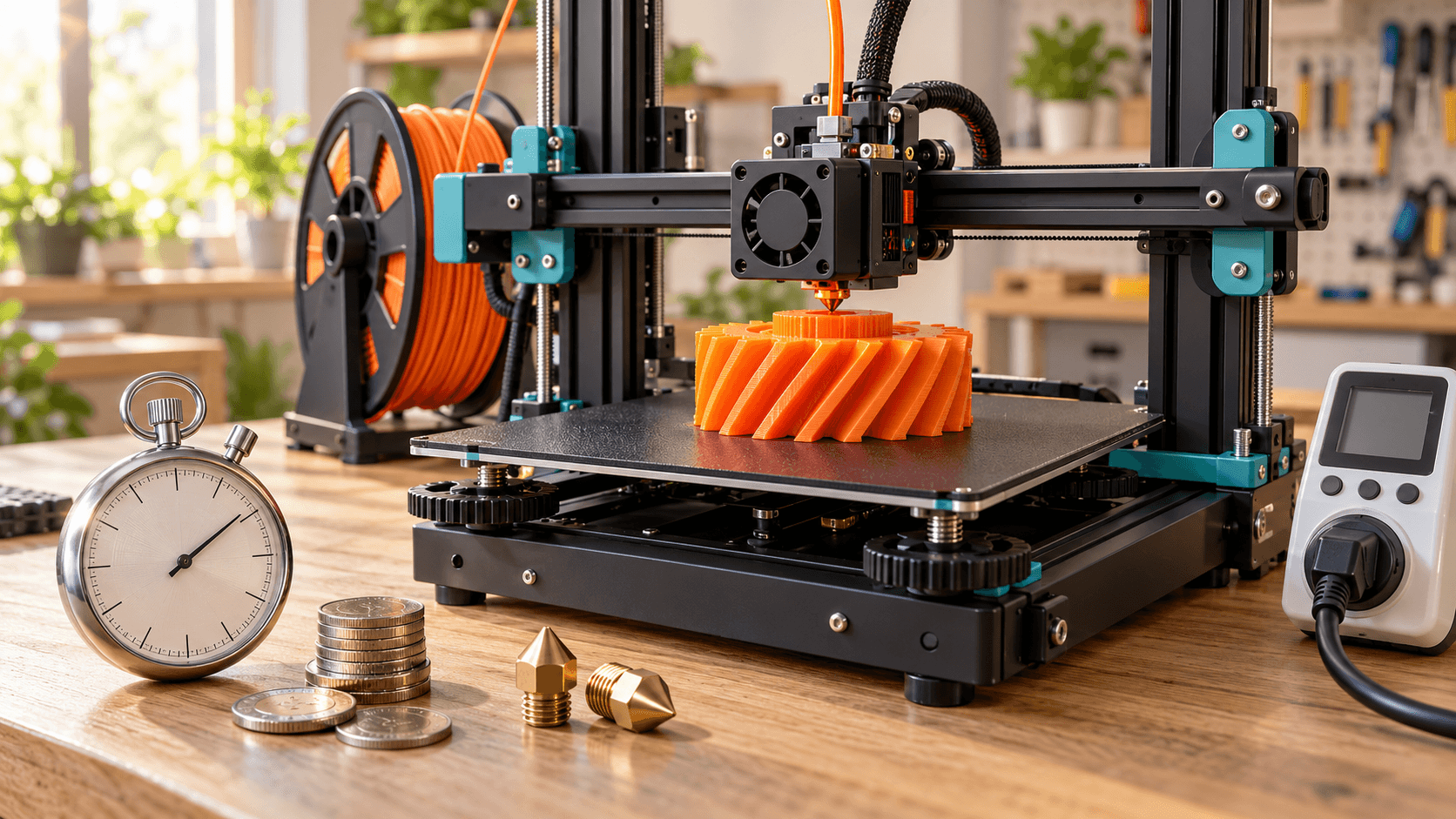
Ein gleichmäßiges Filament erspart Nacharbeit, und genau die frisst die Marge — etwa ELEGOO PLA+ 1,75 mm als Standardrolle. Beim Verschleiß ist die Düse der Posten, den alle vergessen: ein Satz MK8-Düsen kostet wenig und gehört trotzdem in die Kalkulation, weil eine abgenutzte Düse die Qualität still verschlechtert.
Der Anschaffungspreis des Druckers fließt nicht als Ganzes in ein Teil ein, sondern verteilt sich über die Lebensdauer. Teilen Sie den Kaufpreis — bei einem Einstiegsgerät wie dem ELEGOO Neptune 3 — durch die erwarteten Betriebsstunden, und Sie erhalten den Abschreibungsanteil pro Stunde.
Welches Gerät zu Ihnen passt, klärt die Kaufberatung in drei Fragen. Die technischen Daten nebeneinander finden Sie in der Druckerdatenbank.
Pro Teil ist FDM günstiger. Filament reicht weit und bringt keine zusätzlichen Verbrauchsmaterialien mit. Harz kostet pro Liter mehr und zieht Isopropanol, FEP-Folie und ein LCD mit begrenzter Lebensdauer nach sich. Dafür liefert Harz einen Detailgrad, den FDM nicht erreicht — und genau dort entsteht die Marge.
Die vollständige Rechnung für Harz mit allen Posten steht in Was Harzdruck wirklich kostet.
Die im Maker-Umfeld übliche Regel: Gesamtkosten mal 1,5 bis 2,0, also fünfzig bis hundert Prozent Aufschlag. Dazu kommen Ihre Zeit für Modellierung und Nachbearbeitung sowie der Versand. Sonderanfertigungen und eilige Aufträge rechtfertigen einen höheren Faktor.
Wichtig dabei: Der Aufschlag gilt auf die Gesamtkosten, nicht auf den Materialpreis. Wer den Faktor auf das Filament allein anwendet, verkauft unter Selbstkosten und merkt es erst nach Monaten.
Hören Sie auf zu schätzen: Der FDM-Rechner und der Harz-Rechner arbeiten mit Ihren eigenen Preisen und erzeugen ein PDF-Angebot für Ihre Kundschaft.
Wir nehmen am AliExpress-Partnerprogramm teil und verdienen an qualifizierten Käufen über die Links oben.
Die Materialkosten sind nur ein Teil. Rechnen Sie mit dem Zwei- bis Dreifachen des reinen Materialwerts, weil Strom, die Abschreibung des Druckers pro Betriebsstunde, Verbrauchsmaterial und eine Rücklage für Fehldrucke dazukommen. Die Arbeitszeit für Vorbereitung und Nachbearbeitung ist darin noch nicht enthalten.
Teilen Sie den Preis der Filamentrolle durch 1.000, das ergibt den Materialpreis pro Gramm. Diese Zahl beschreibt aber nur das Material: für die tatsächlichen Produktionskosten kommen Strom, Abschreibung und Fehlerquote hinzu.
Üblich sind Gesamtkosten mal 1,5 bis 2,0, also fünfzig bis hundert Prozent Marge, zuzüglich Arbeitszeit und Versand. Entscheidend ist, den Faktor auf die Gesamtkosten anzuwenden und nicht auf den Materialpreis allein.
Eine Stunde auf einem FDM-Drucker kostet 0,14 €: Abschreibung, Strom und Fehldruck-Rücklage. Die vollständige Rechnung — und warum Stundensätze scheitern.

Die wichtigsten Merkmale von 3D-Druckern im Vergleich — finden Sie mit unserer Tabelle den idealen Drucker für Ihr Projekt.
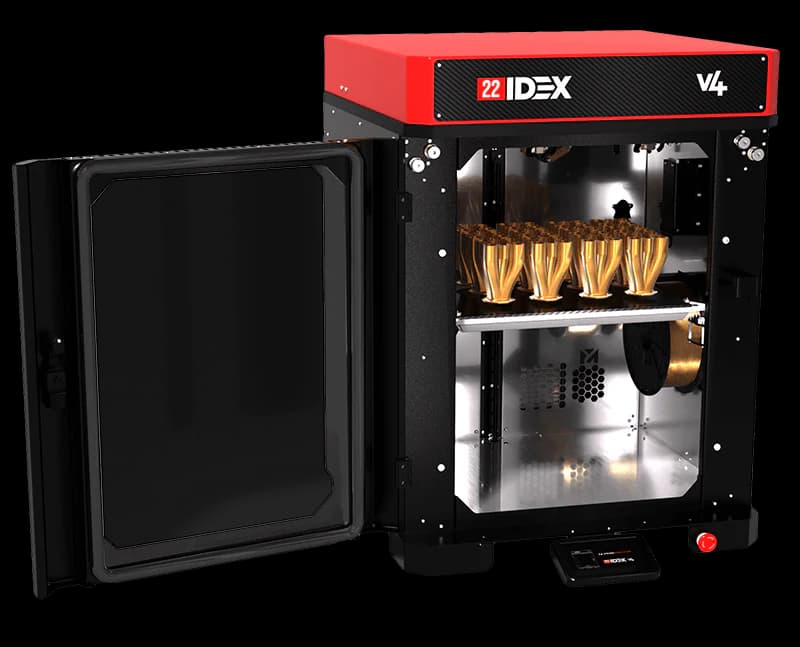
Wie Sie den passenden industriellen FDM-Drucker für Ihren Workflow finden — von günstigen Modellen bis zur Großproduktion.